
EXPO 2025 Japan Pavilion
It’s not just about us, but when an animal, plant, or a thing nears to the end of its role, part of it is carried on, transforming and taking on a new role. We all live through these connections.
When looking at this space between lives, people will notice that the world is made up of countless, tiny cyclical loops.
A full life may be one in which all life is respected with its meaning and value understood, and it might be lived as part of the entire cycle between lives. The relationship to nature and aesthetic sensibility that have flourished in this country are key to achieving this richness in life.
The pavilion allows visitors to experience such a “singular cycle” with no beginning nor end.
Architecture
建築
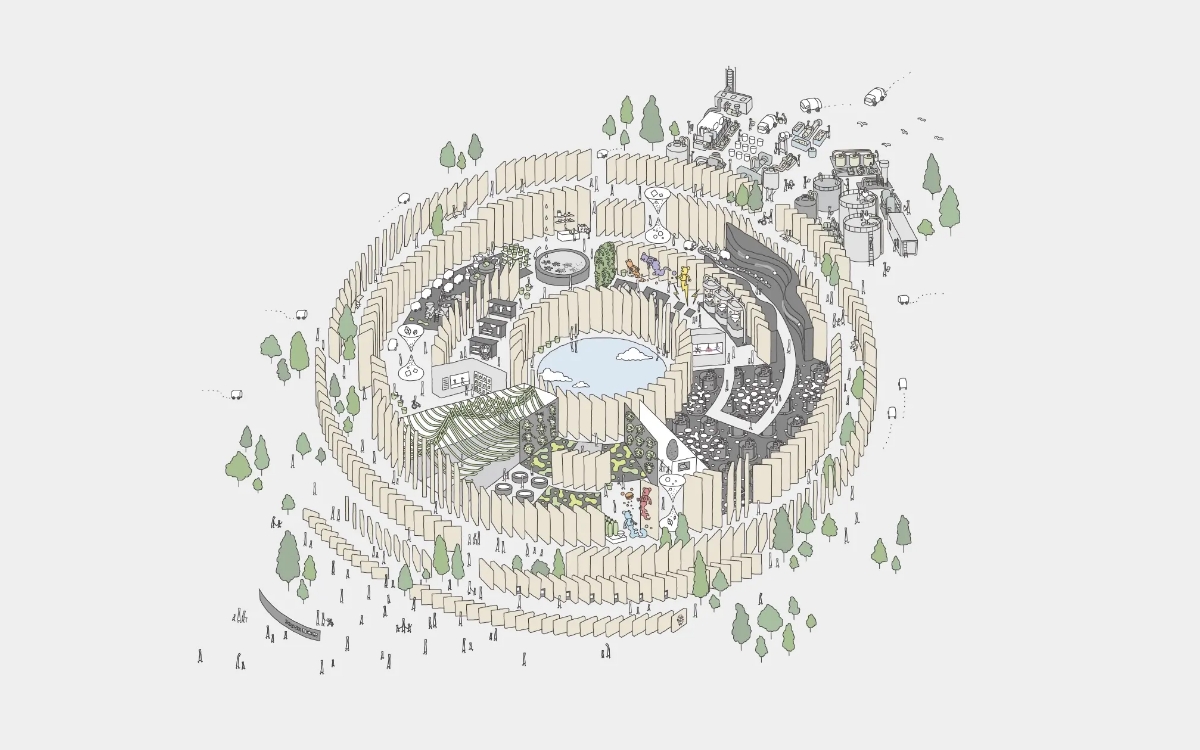
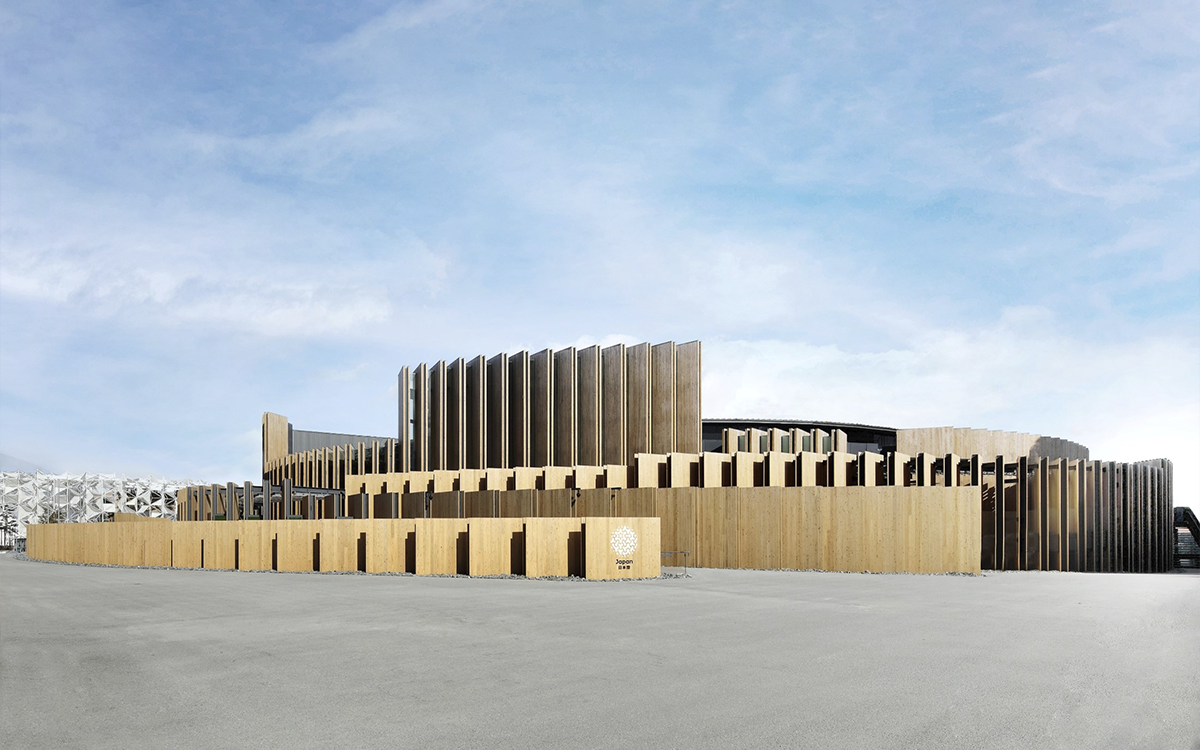
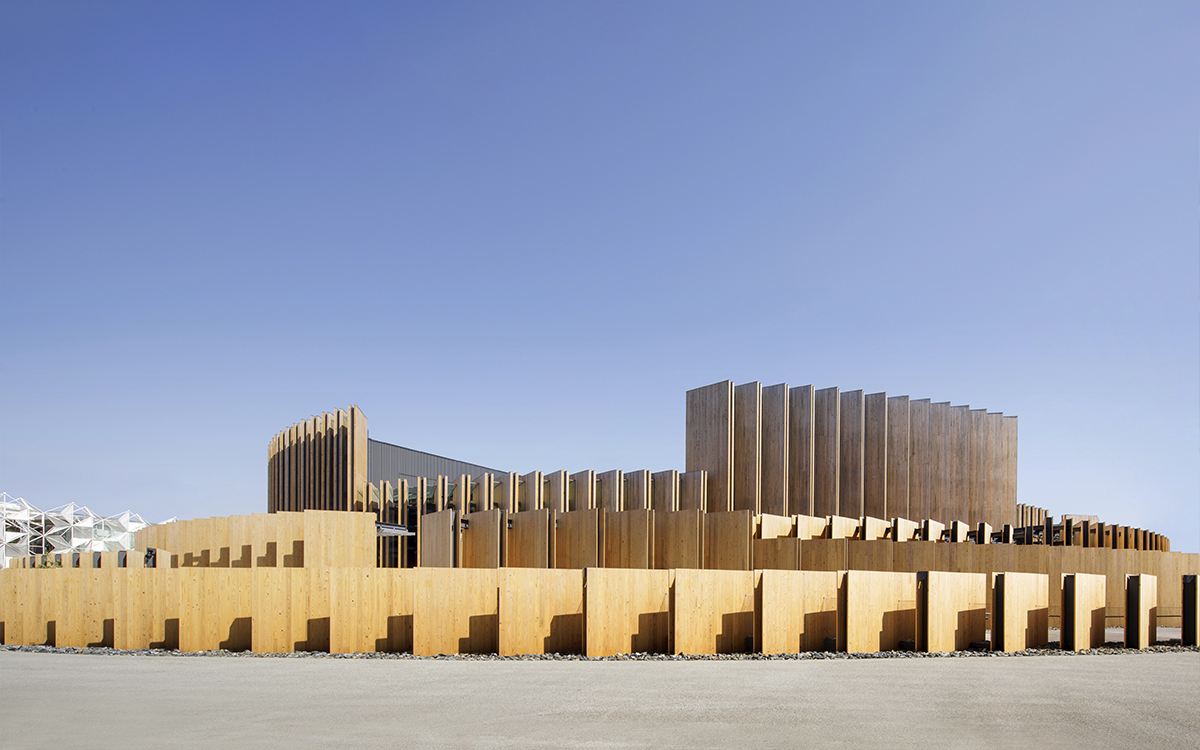
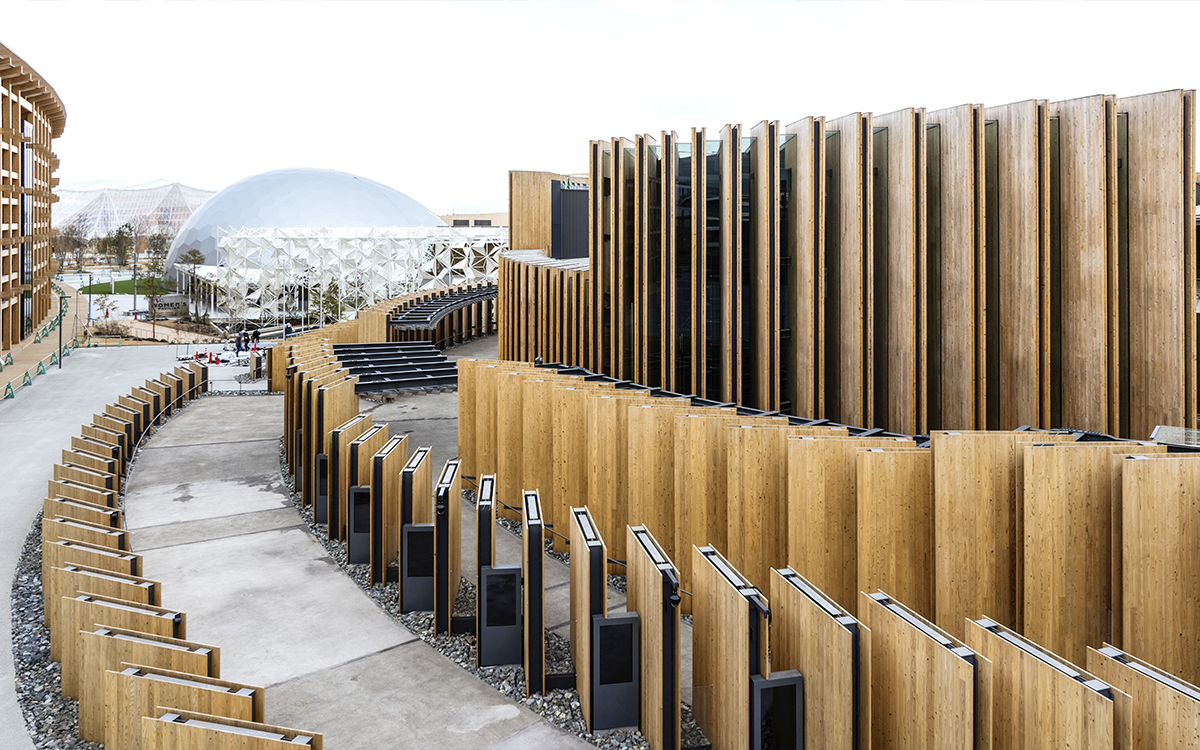
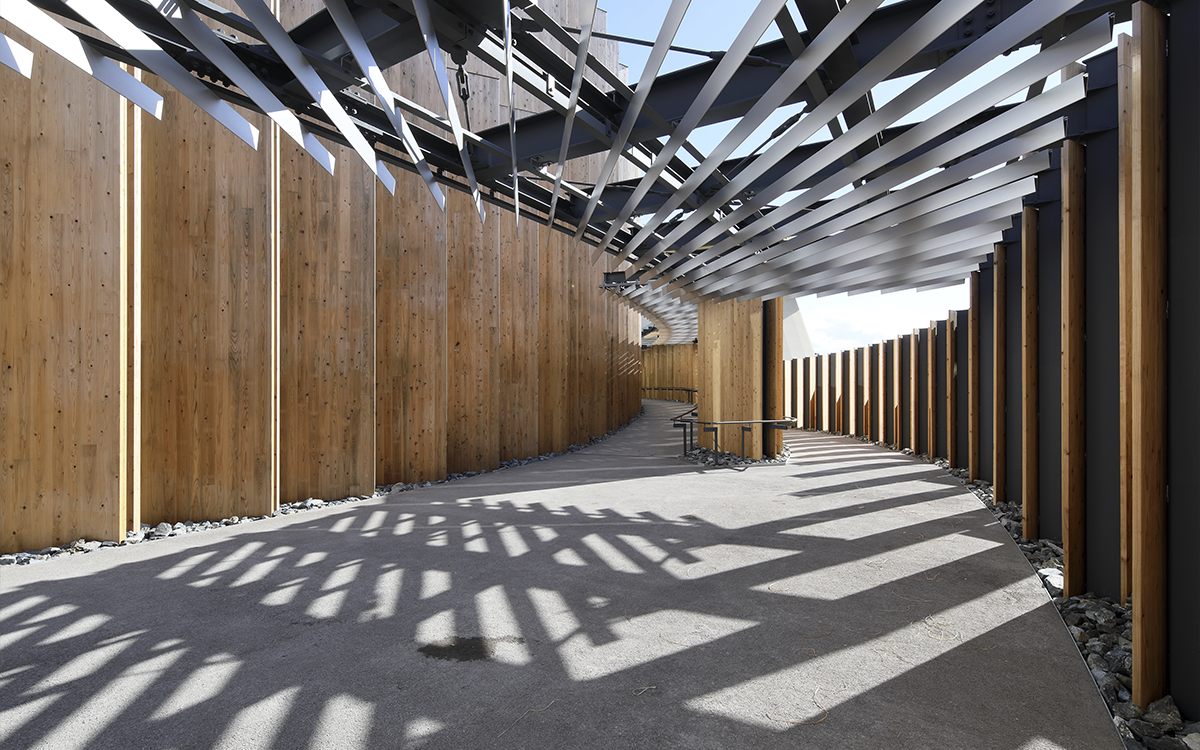
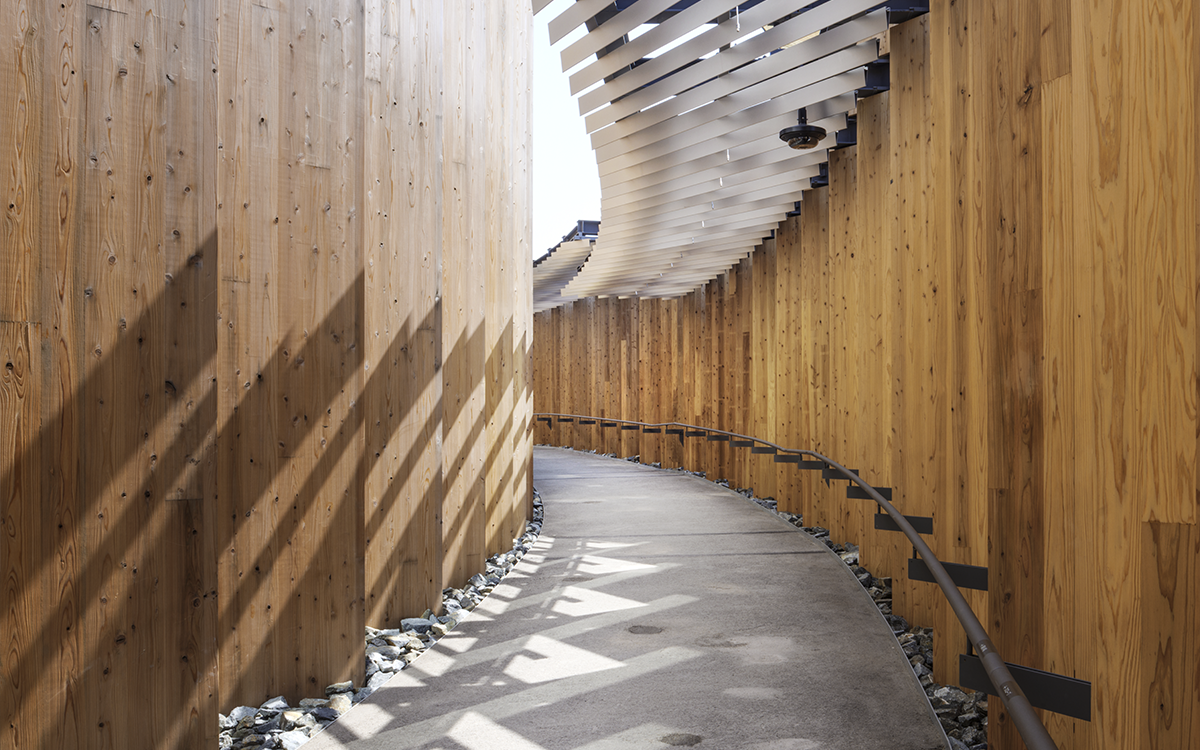
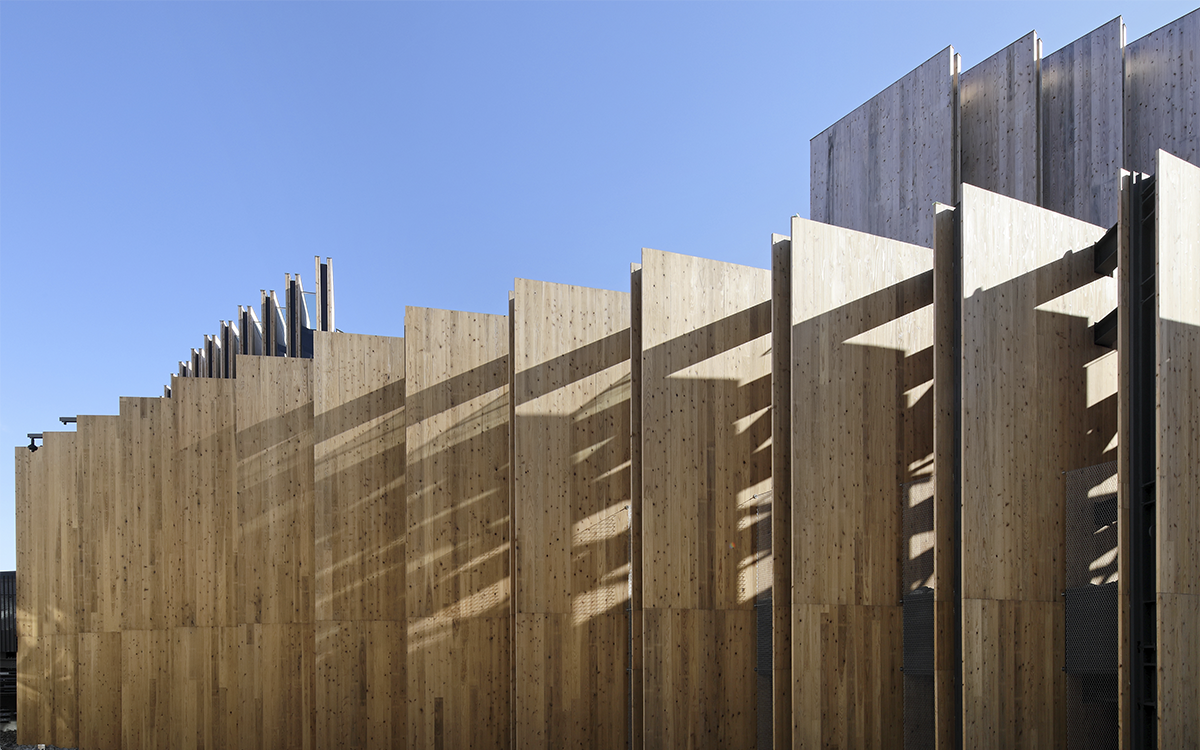
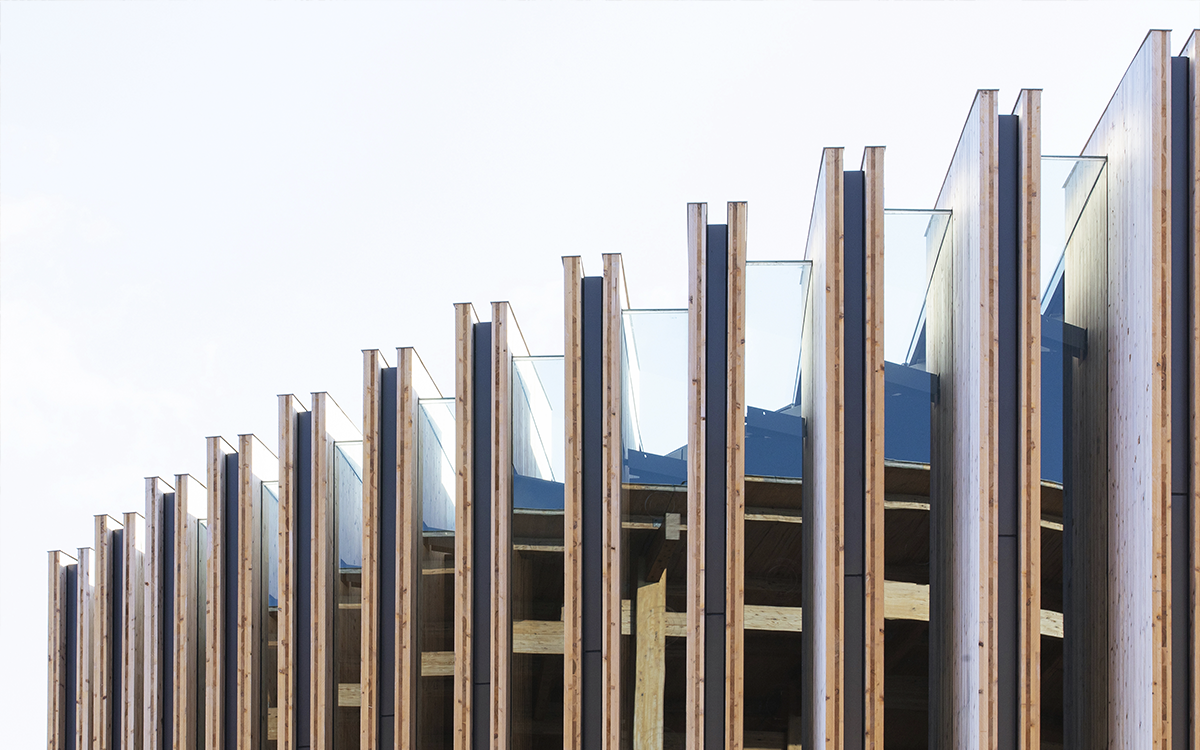
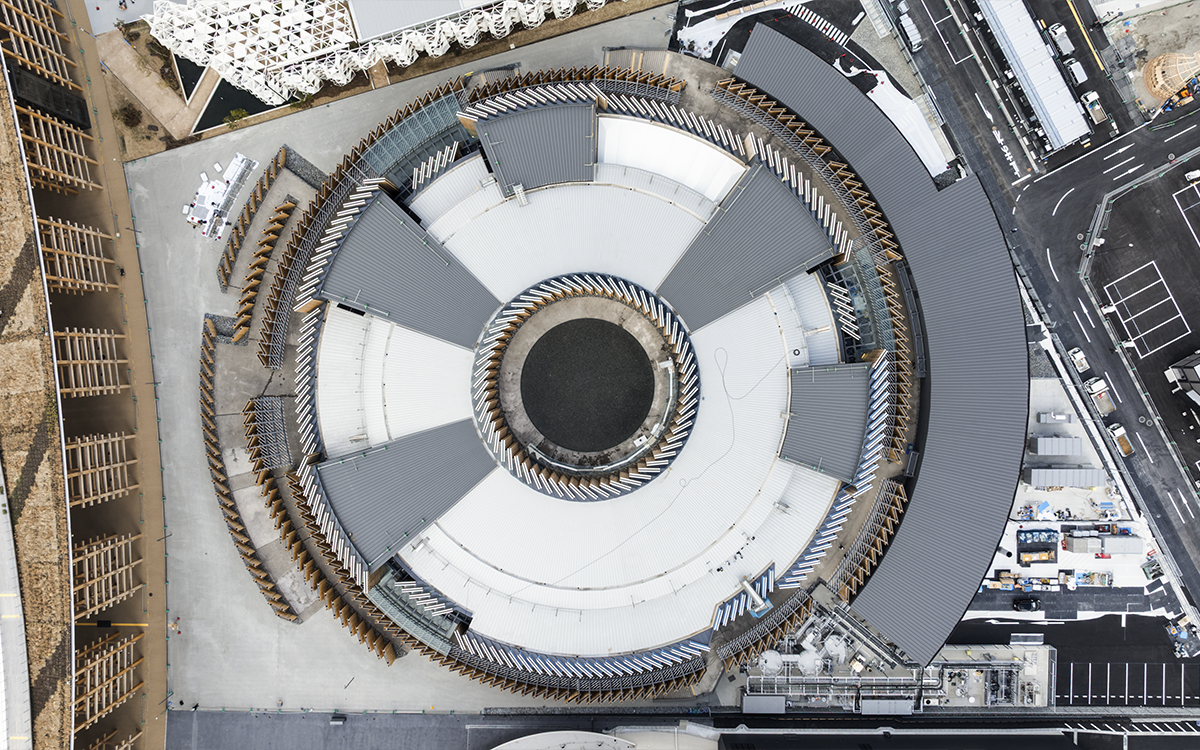
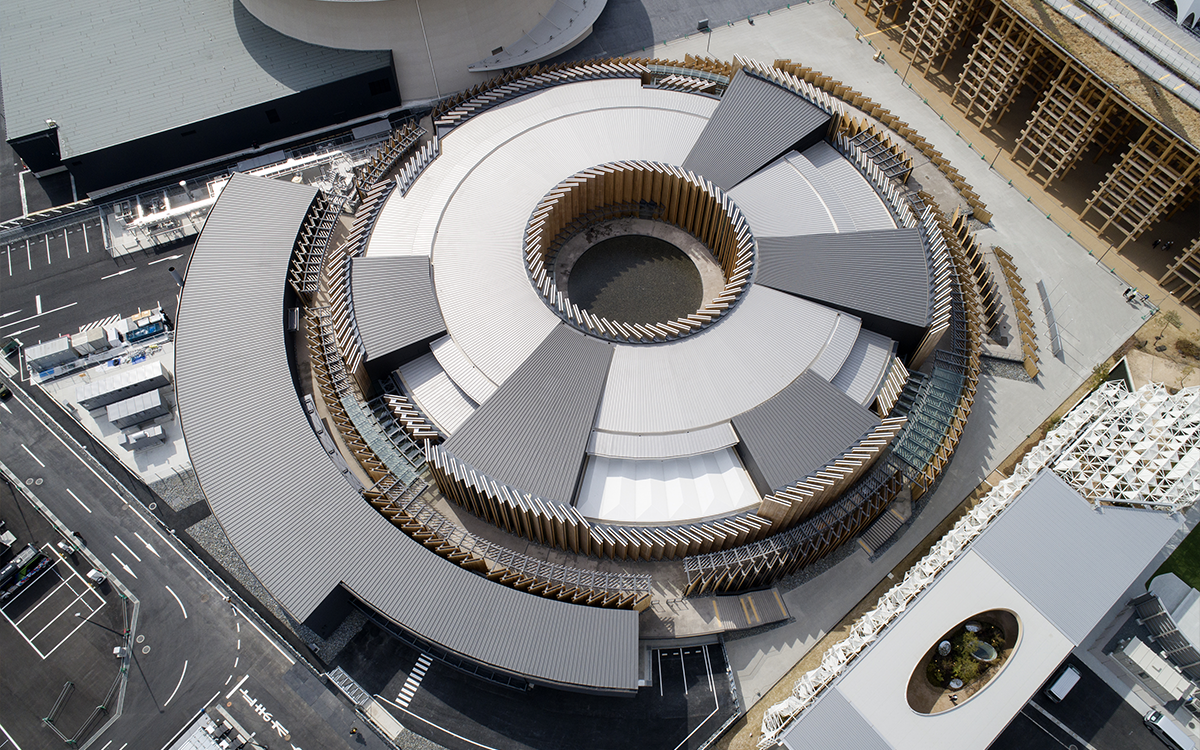
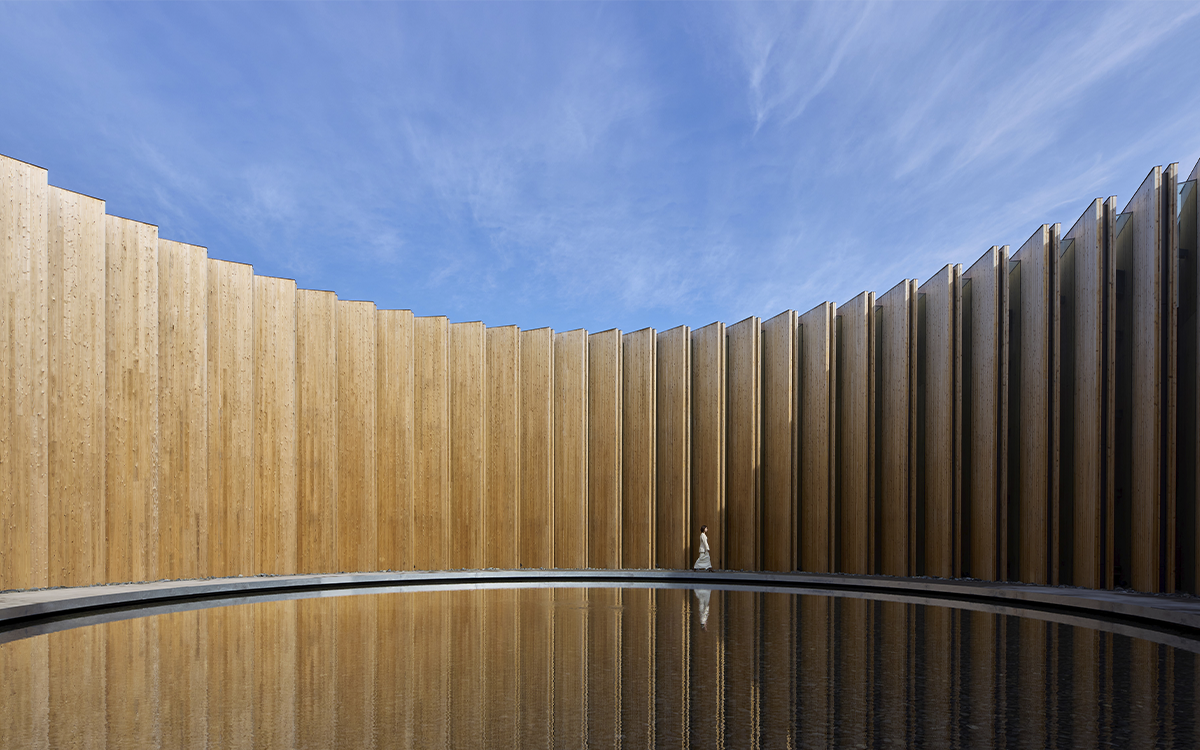
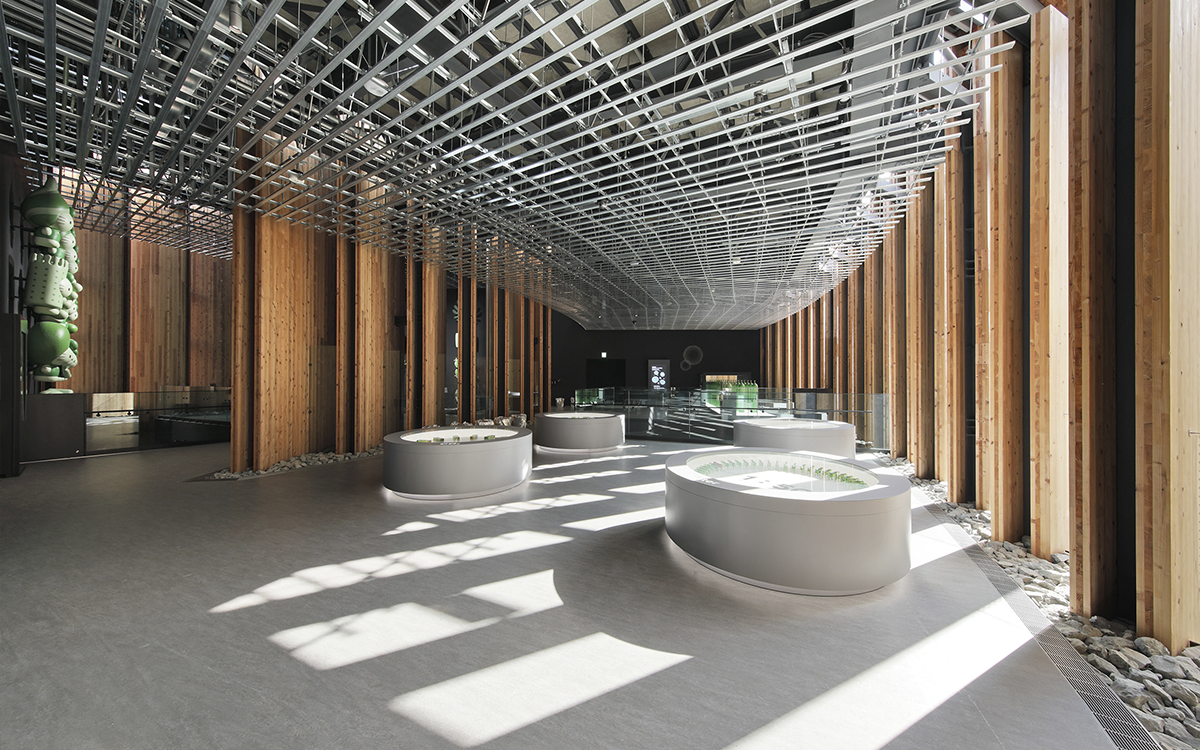
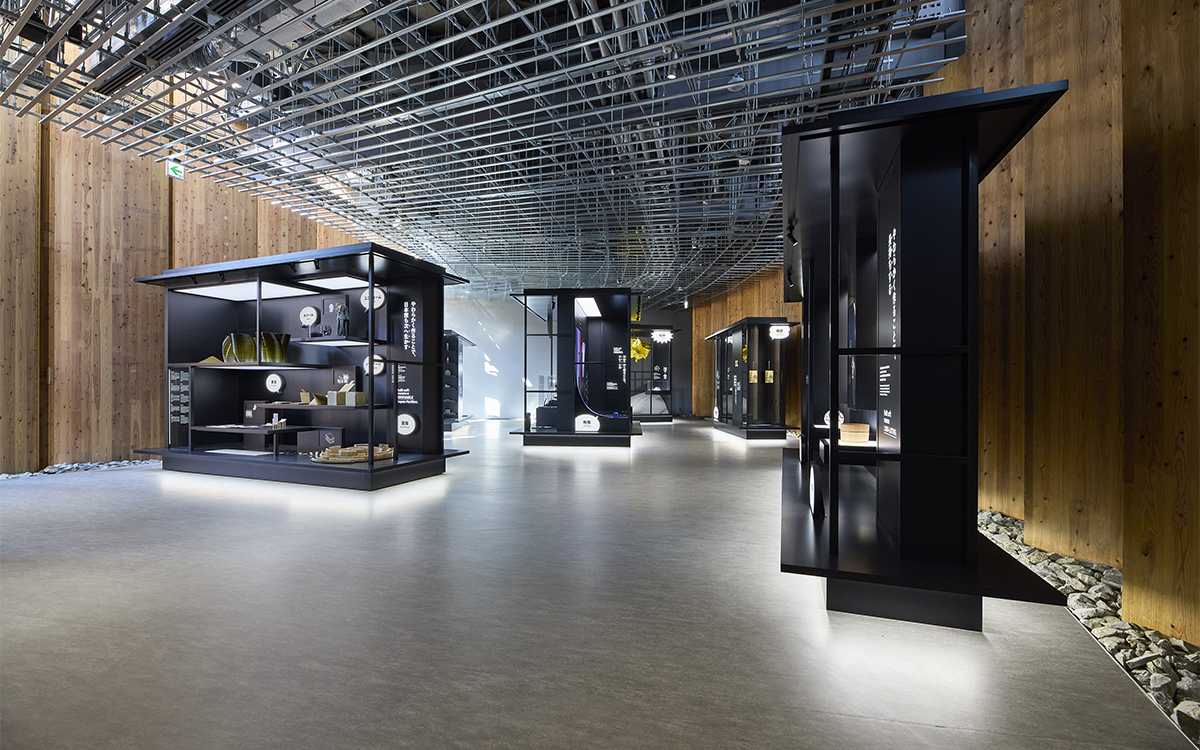
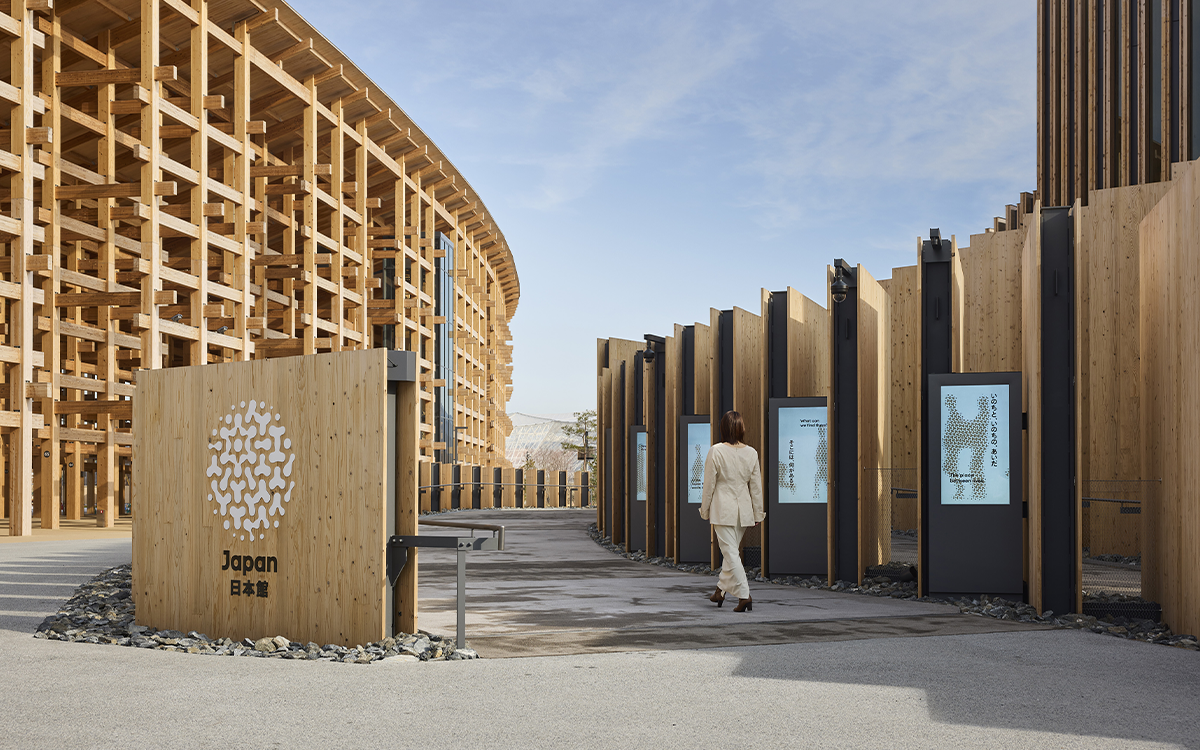
A circular form embodies the ongoing relay of life within the Japan Pavilion. Its most distinctive feature is the wooden panels arranged in a ring. Composed of CLT (cross-laminated timber), the architecture is designed with reusability in mind—meant to be dismantled and reused for buildings across Japan after the Expo concludes. Through the gaps between the panels, visitors can glimpse the interior, creating a seamless continuity between inside and outside, between the exhibits and the architecture—prompting visitors to become aware of the subtle “in-between,” which lies at the heart of the pavilion’s theme.
Experience
展示体験
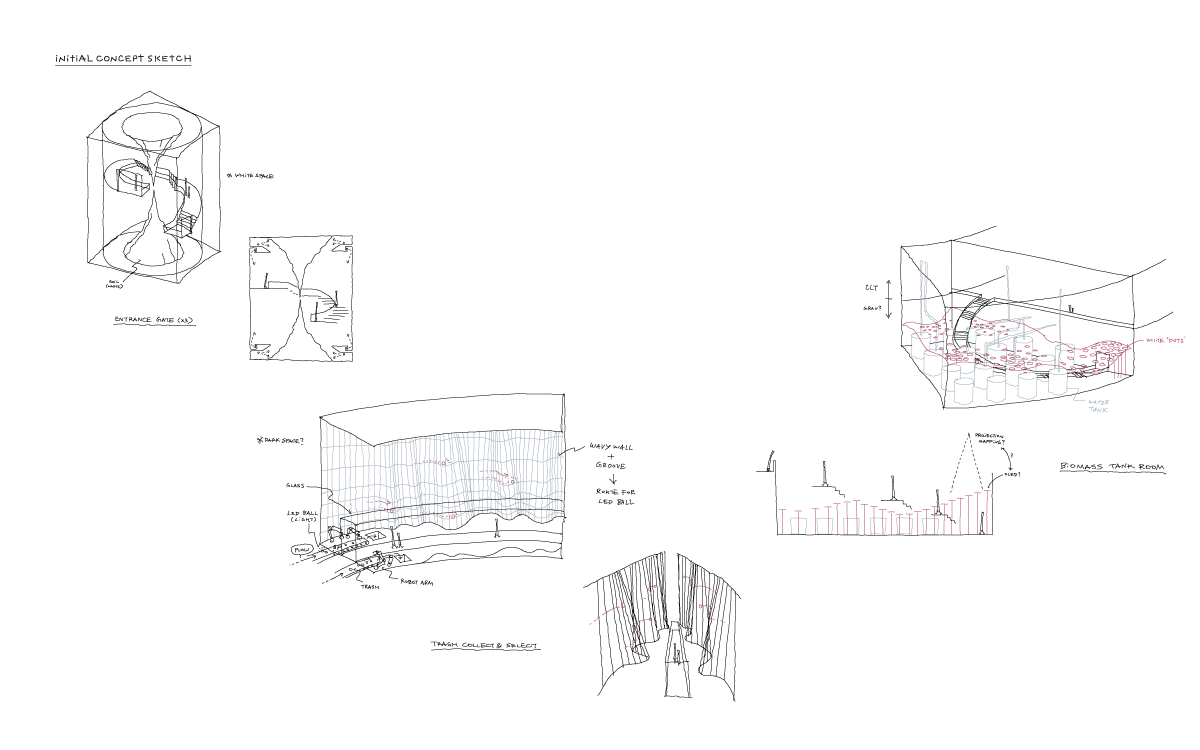
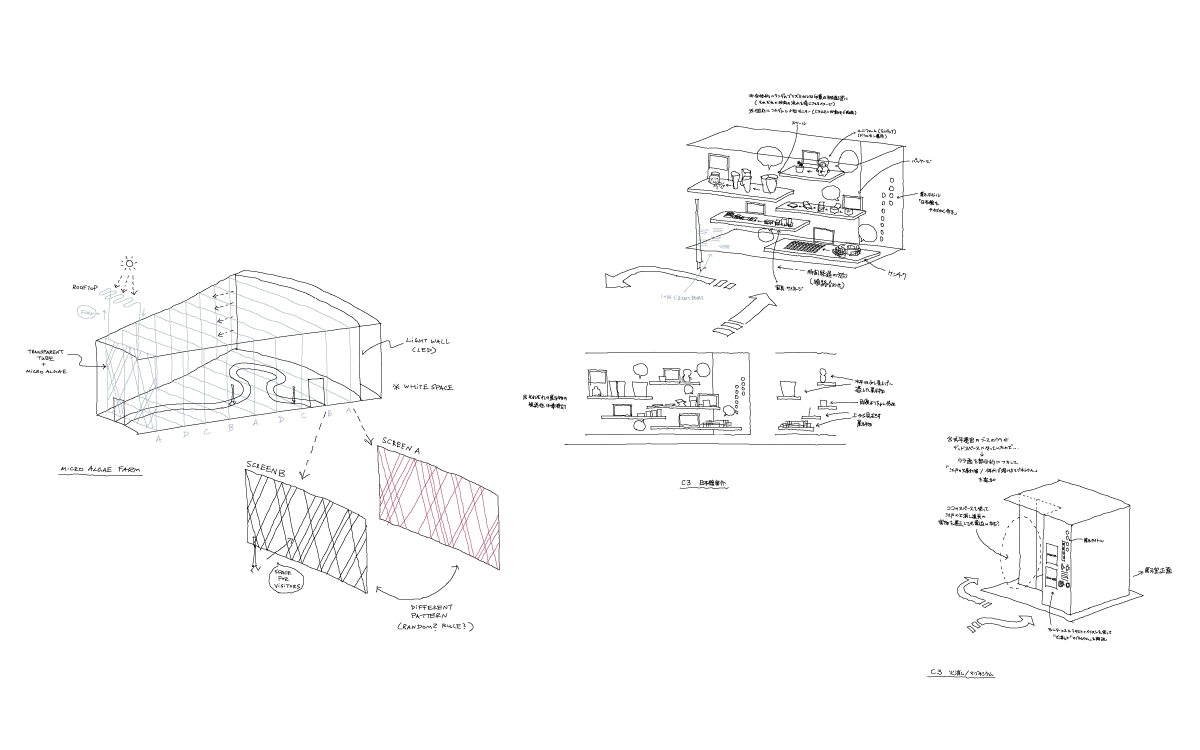
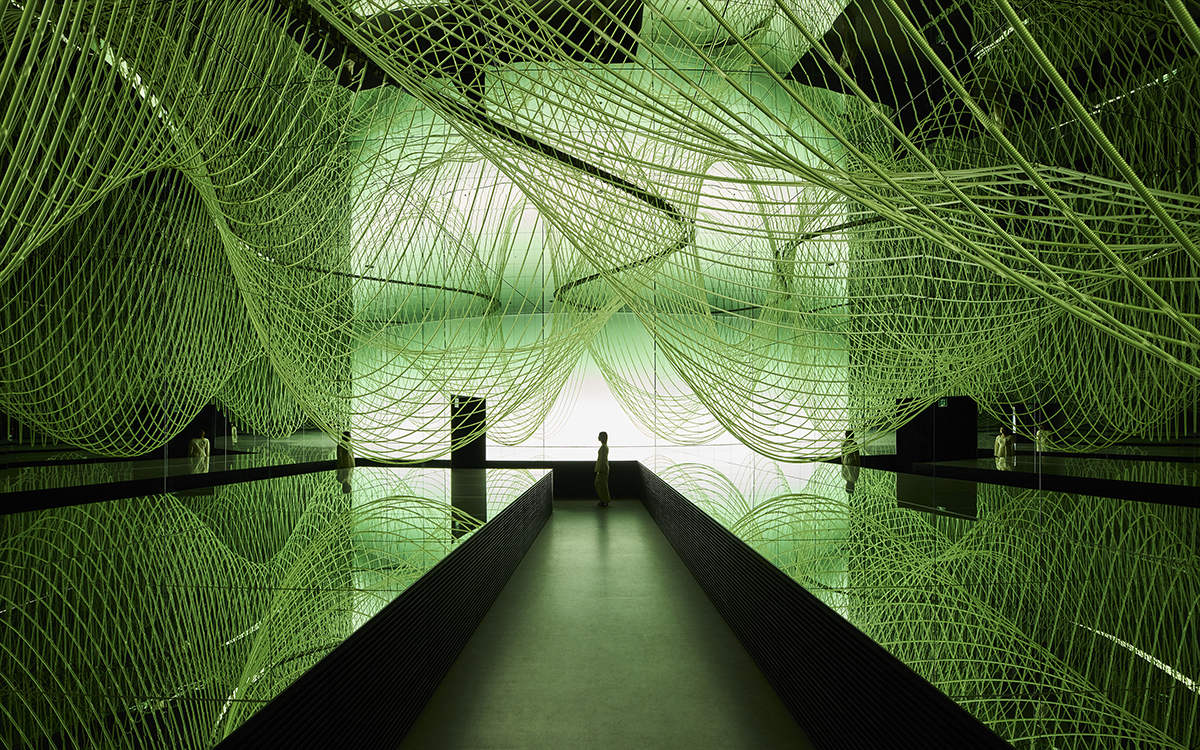
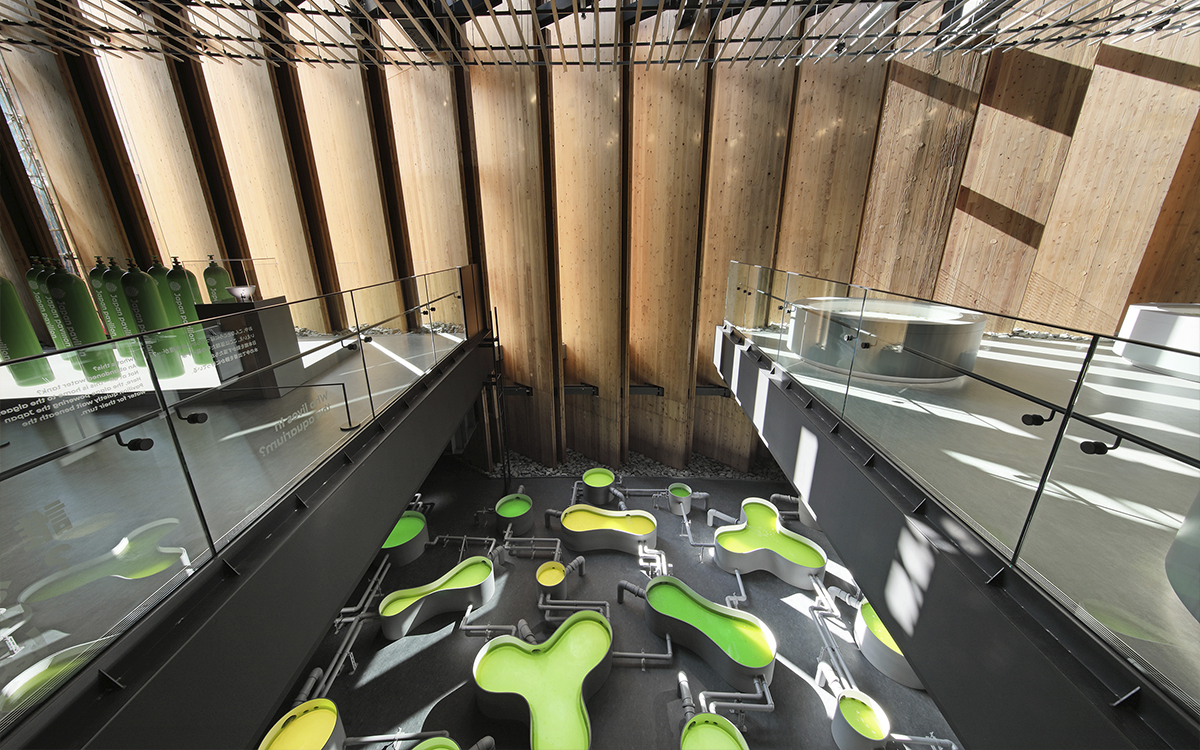
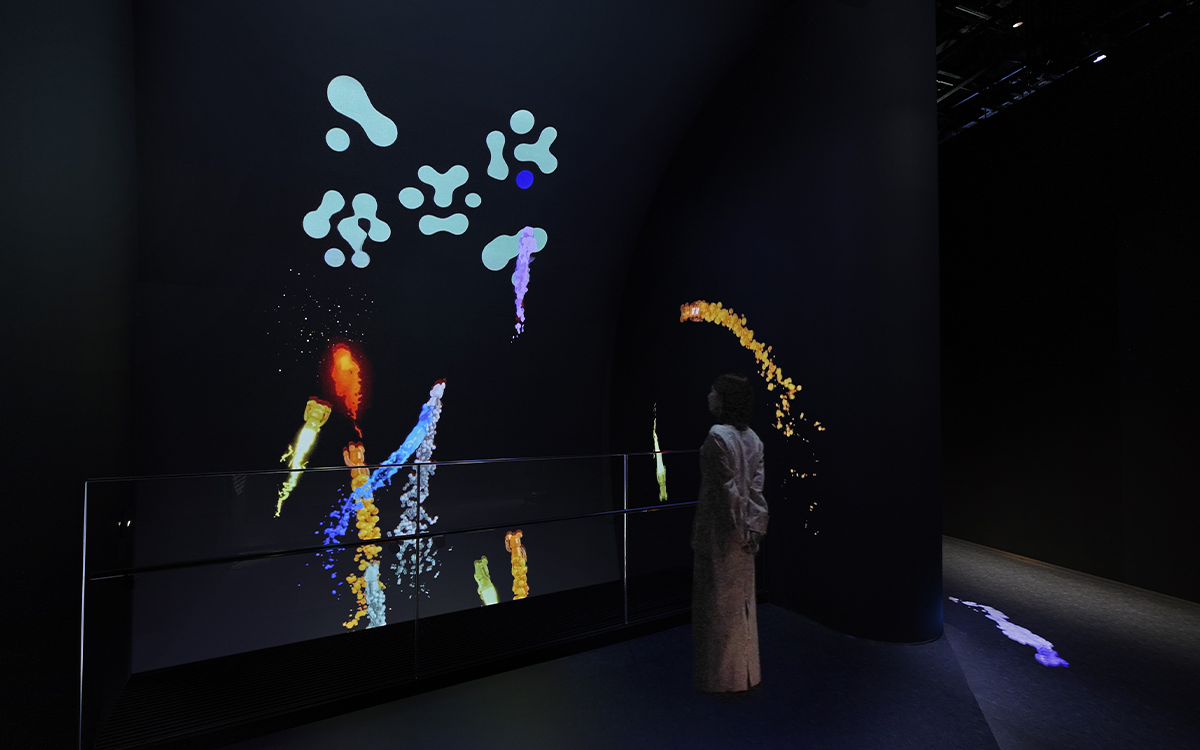
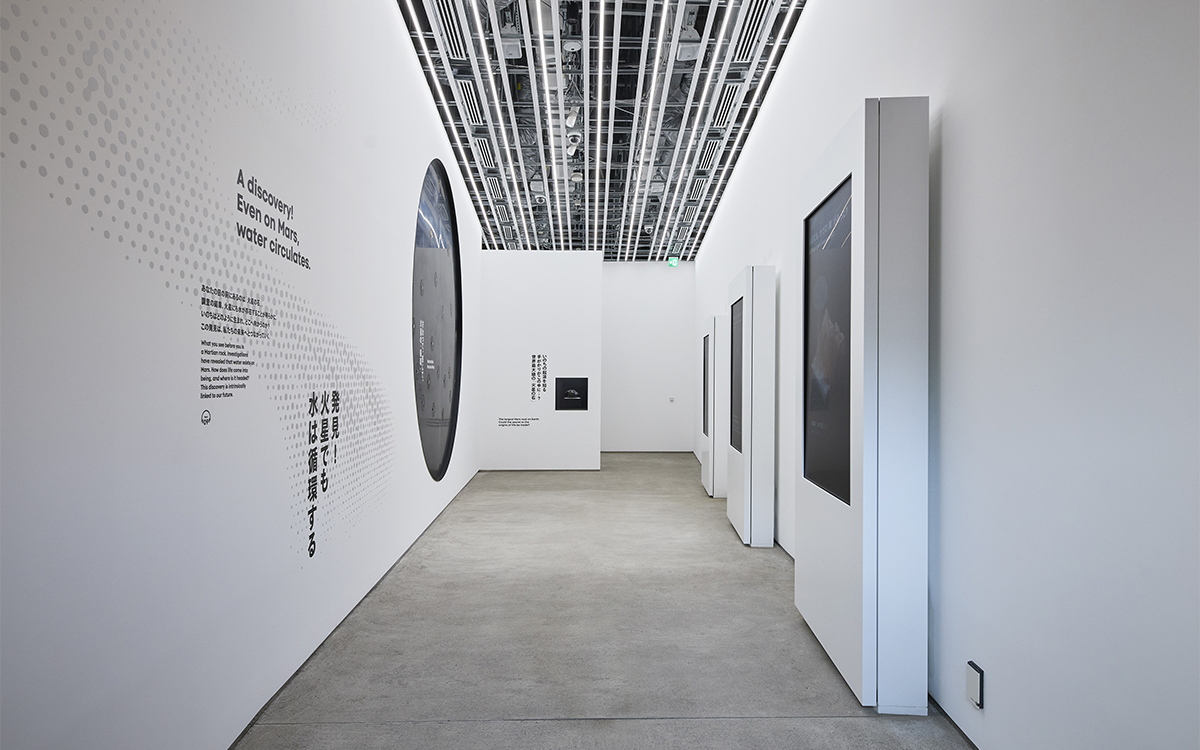
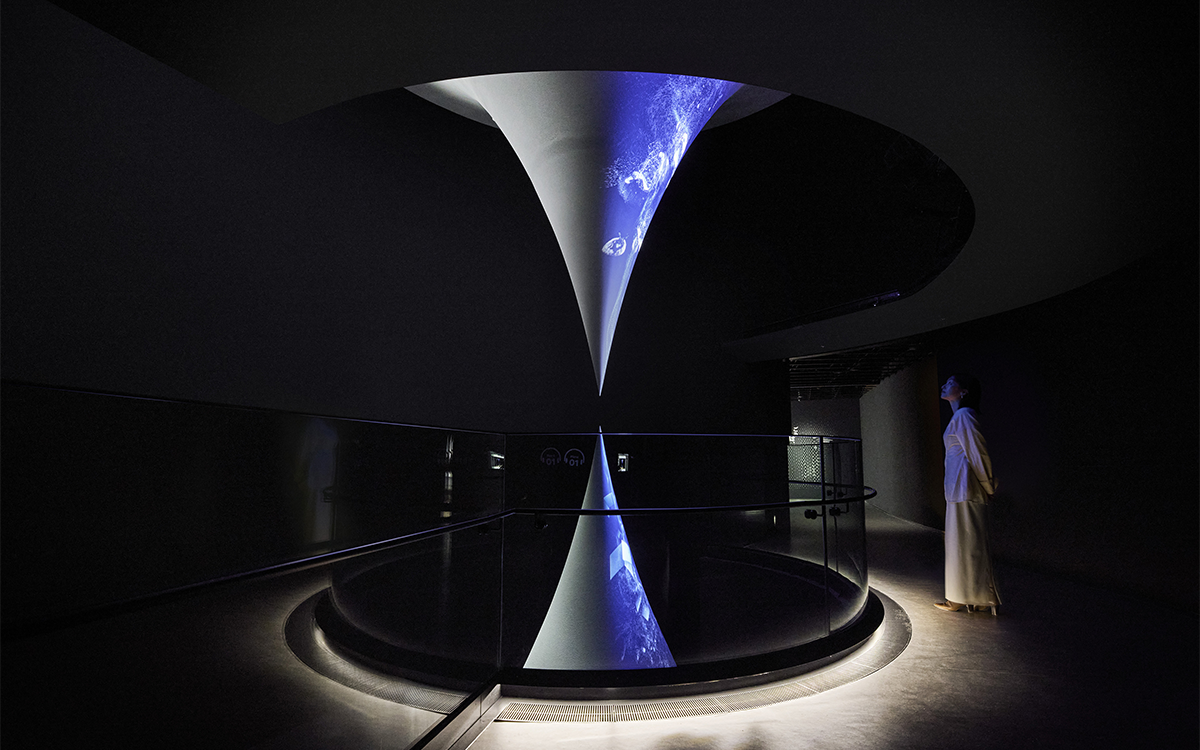
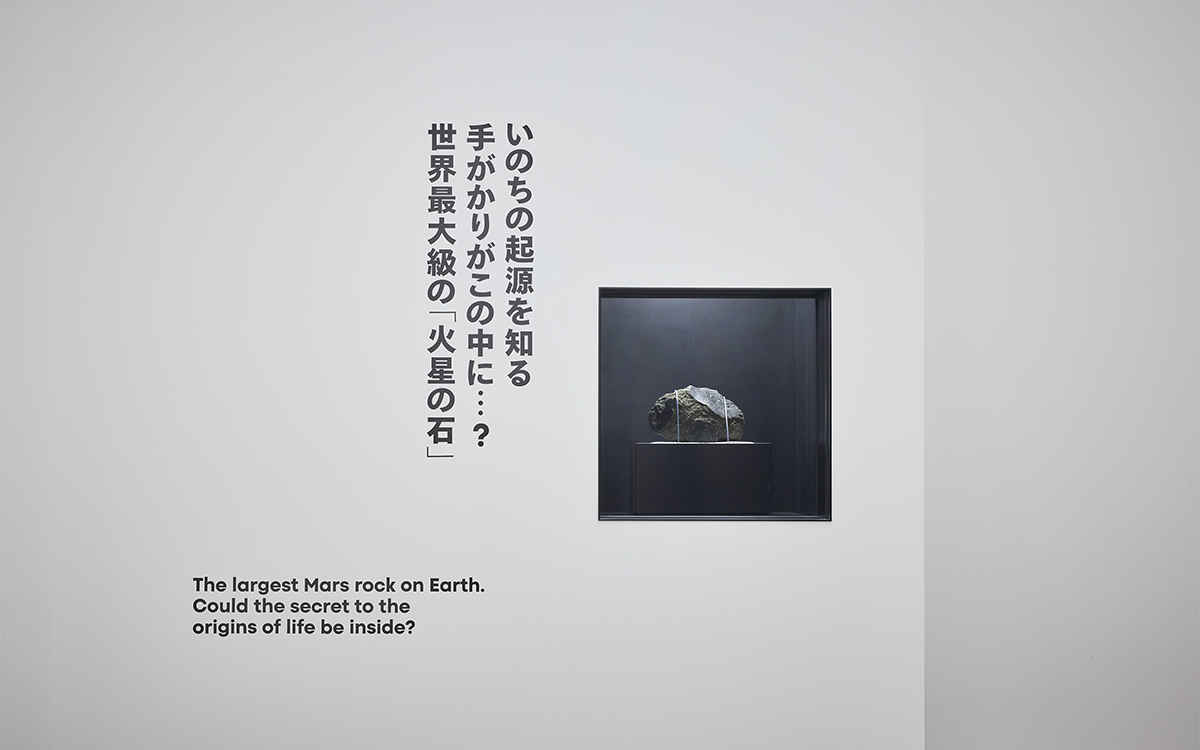
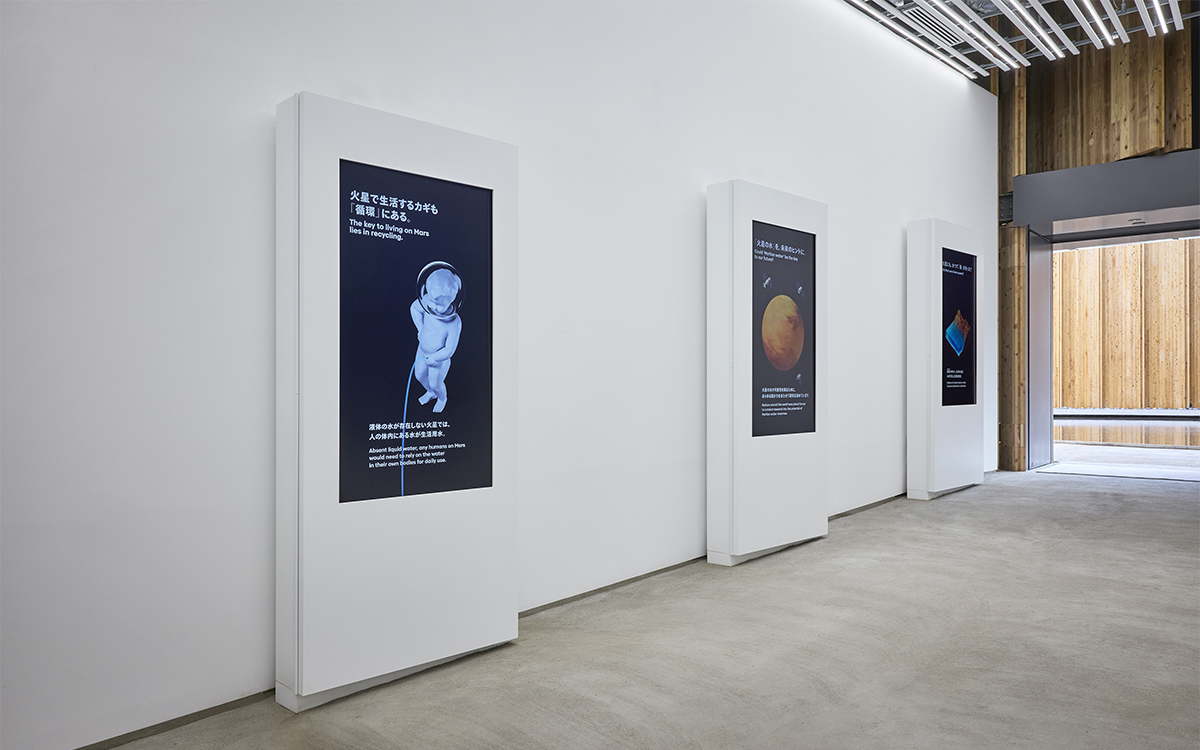
The Japan Pavilion devours waste—Its core is a biogas plant. Waste from the Expo is broken down by microorganisms, transforming into electricity, water, and other forms of energy. This regenerative process becomes a live installation, where visitors can trace the energy flow that powers the pavilion itself. As they journey through the three zones, visitors are invited to experience the Japanese notion of circulation—realizing, perhaps, that they themselves are part of something much larger. It has no beginning, no end—it is an eternal cycle. Depending on which of the three entrances they take and where they exit, each visitor encounters a subtly different story.
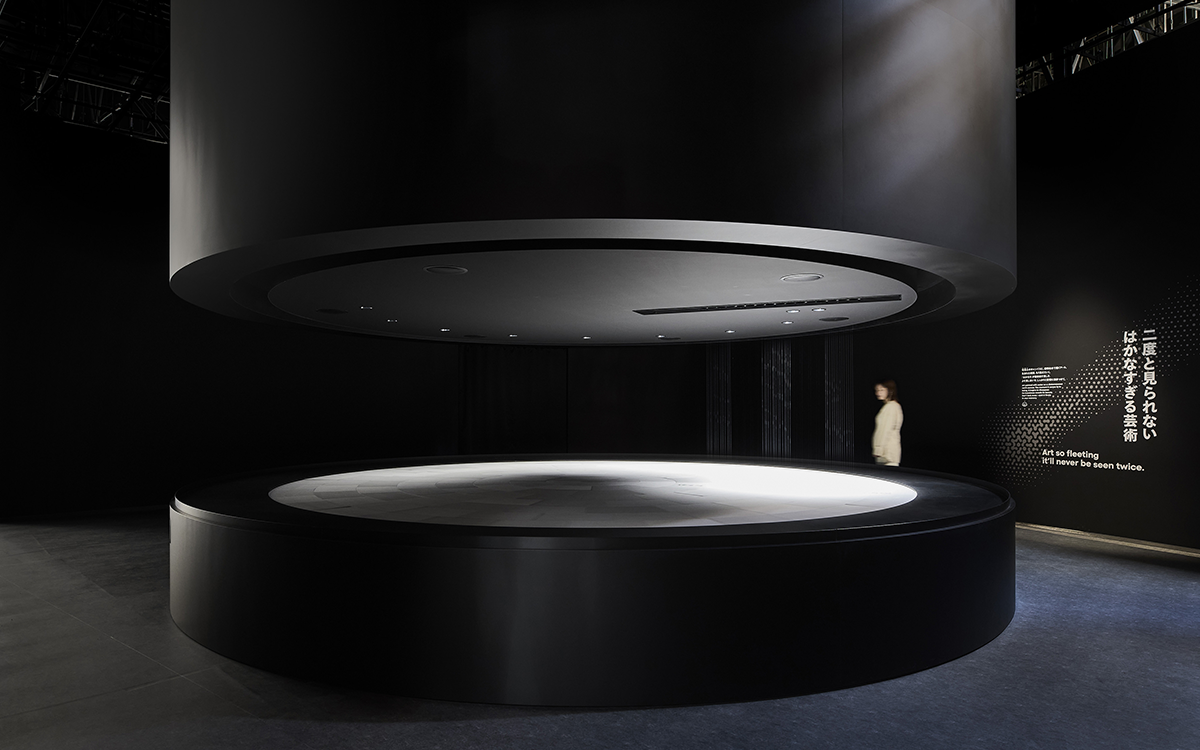
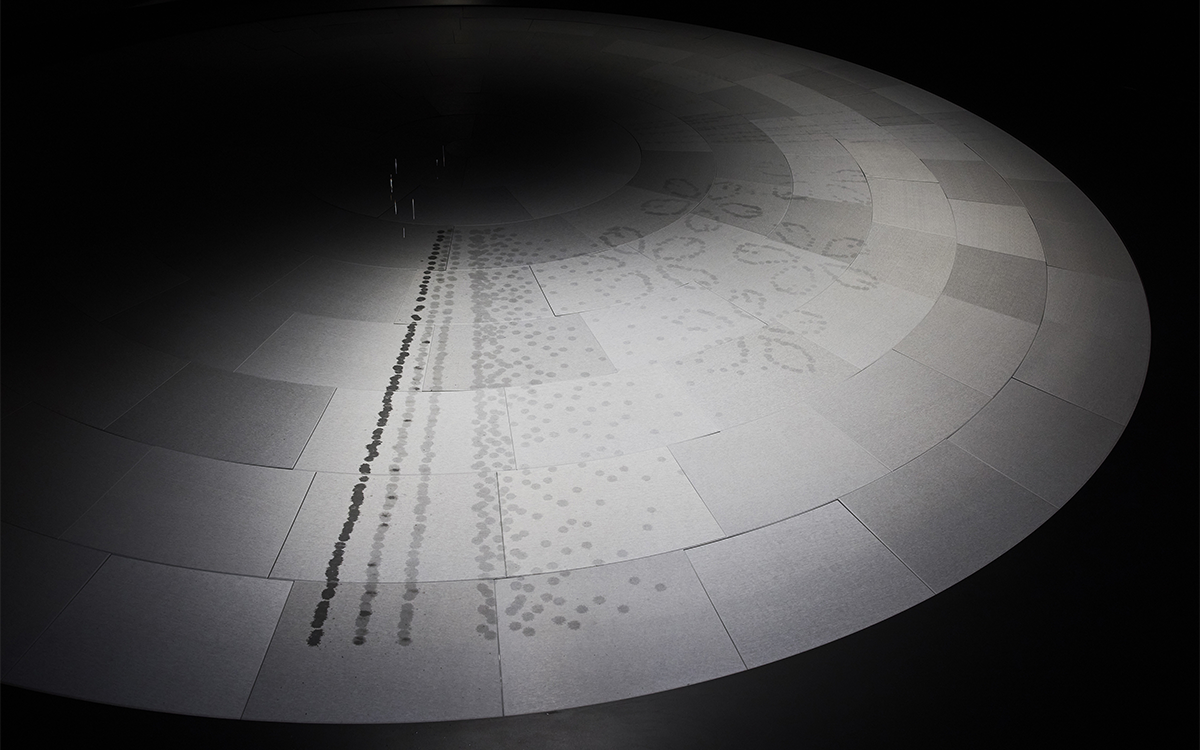
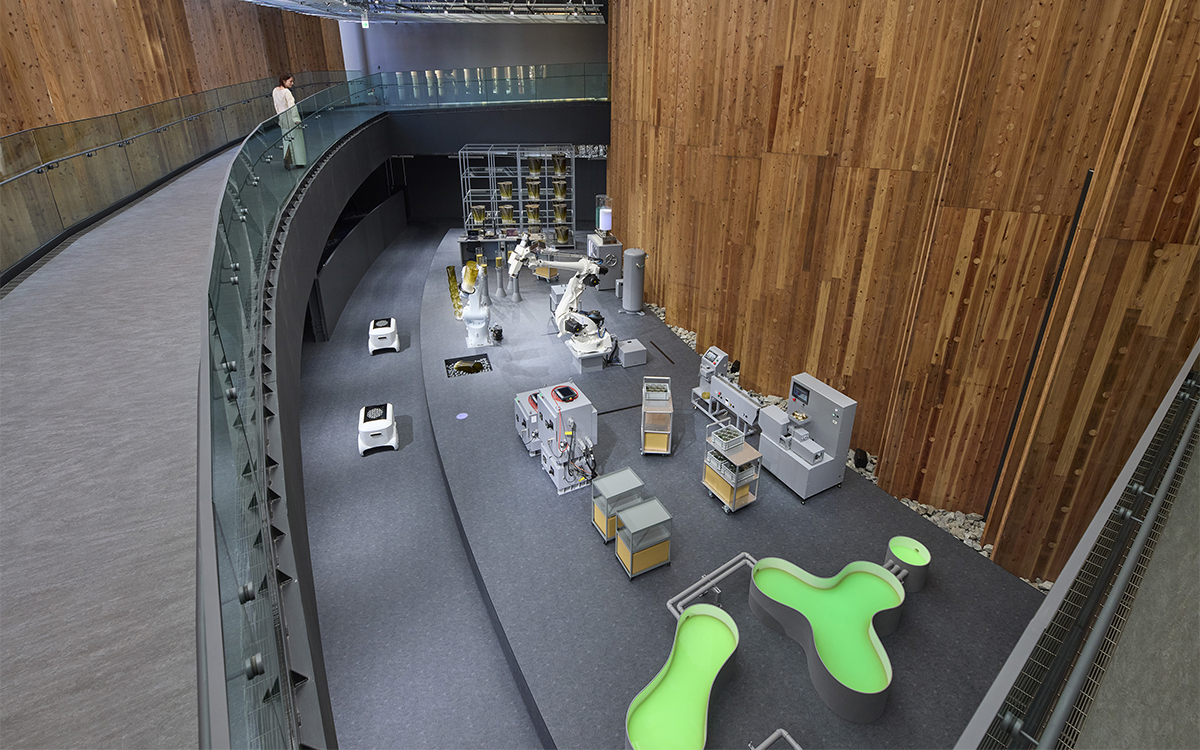
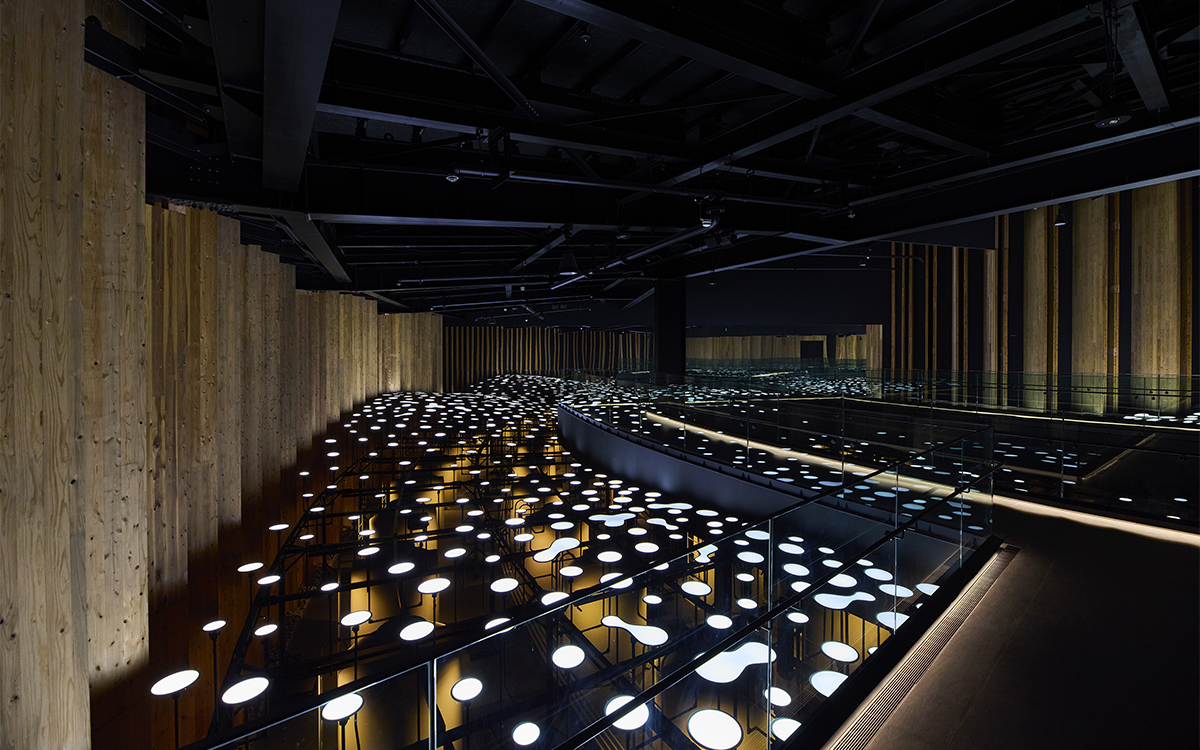
Visual Communication
ビジュアルコミュニケーション
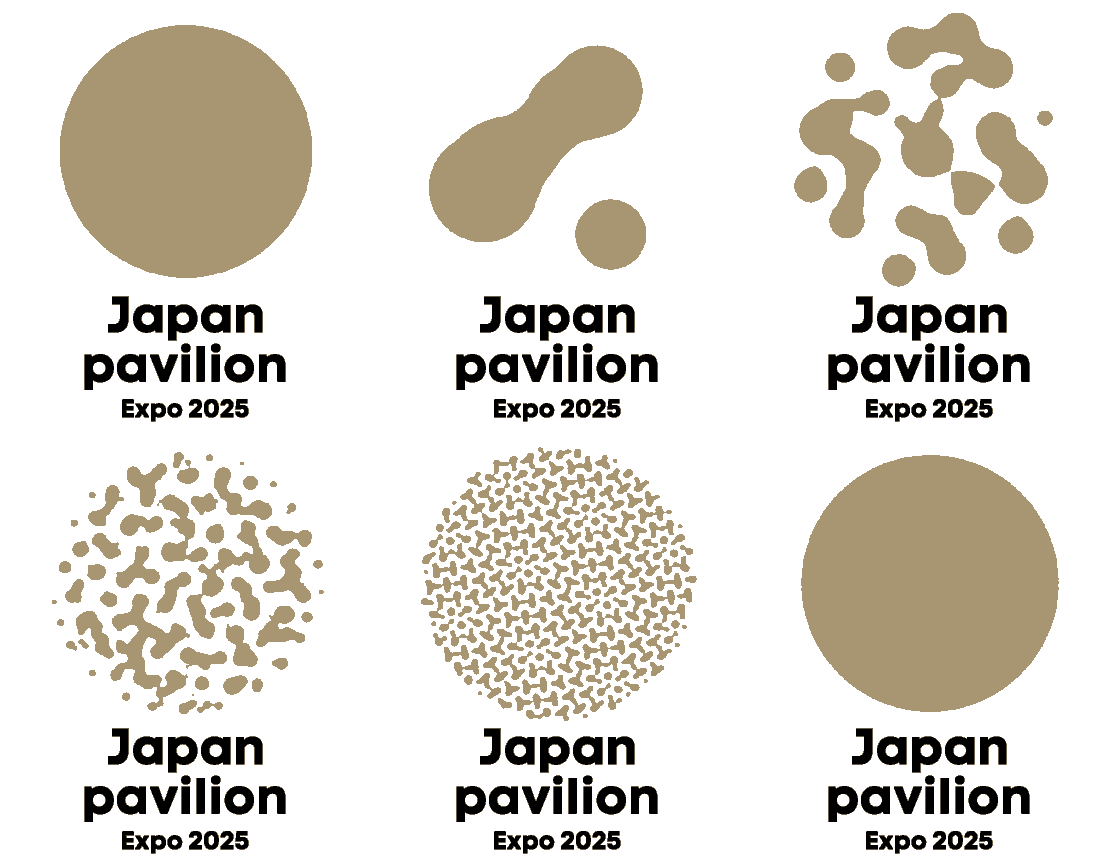
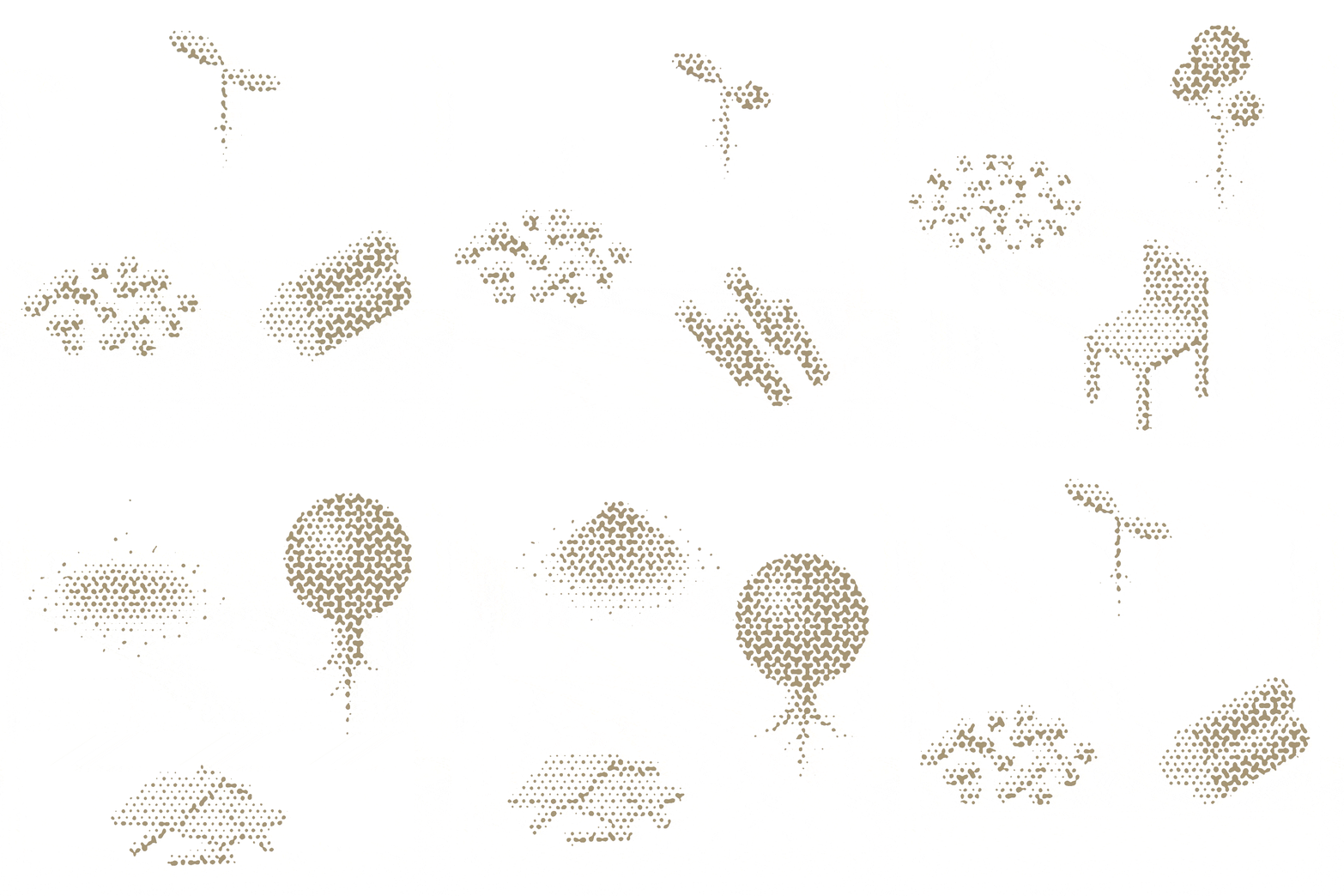
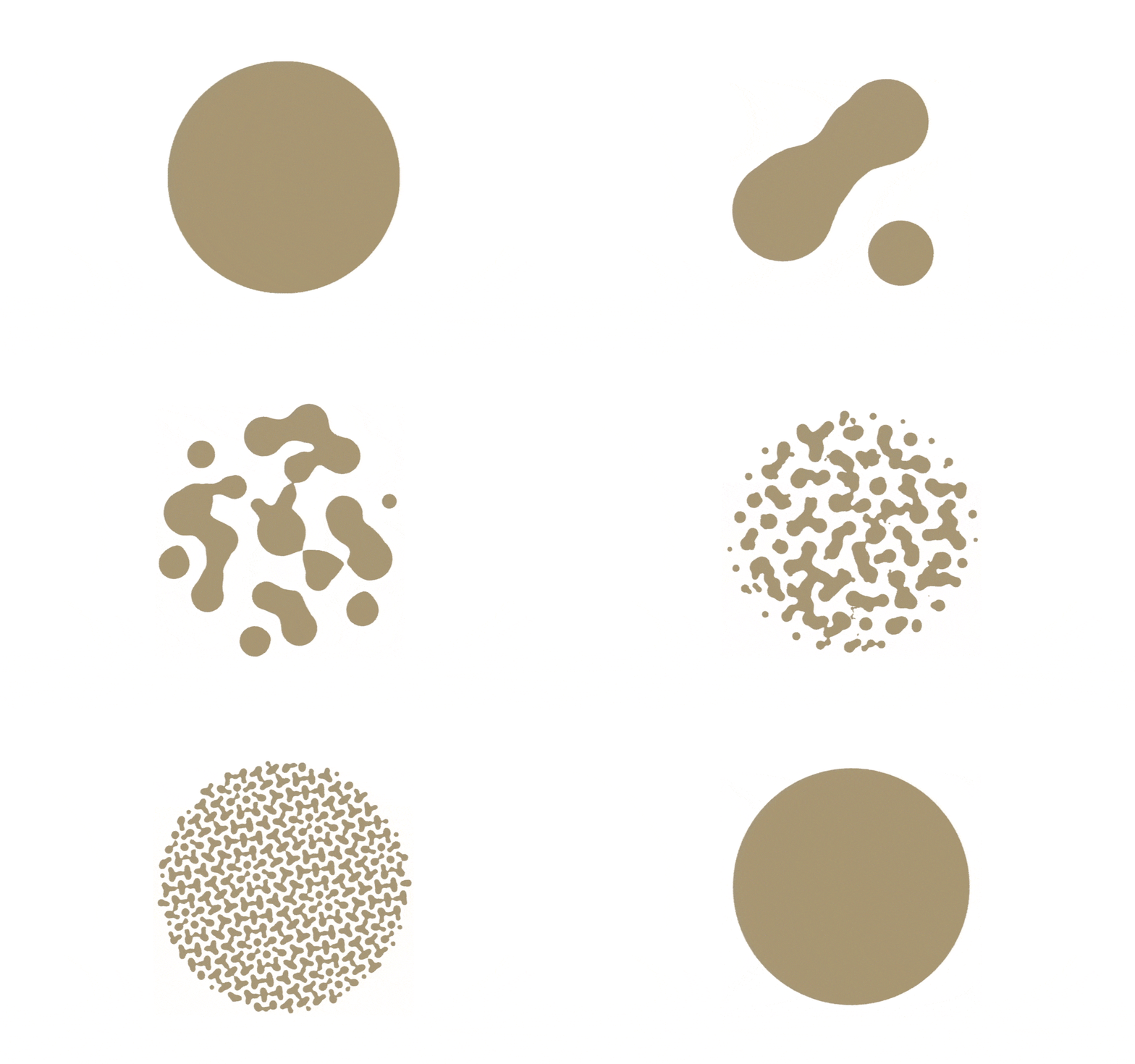
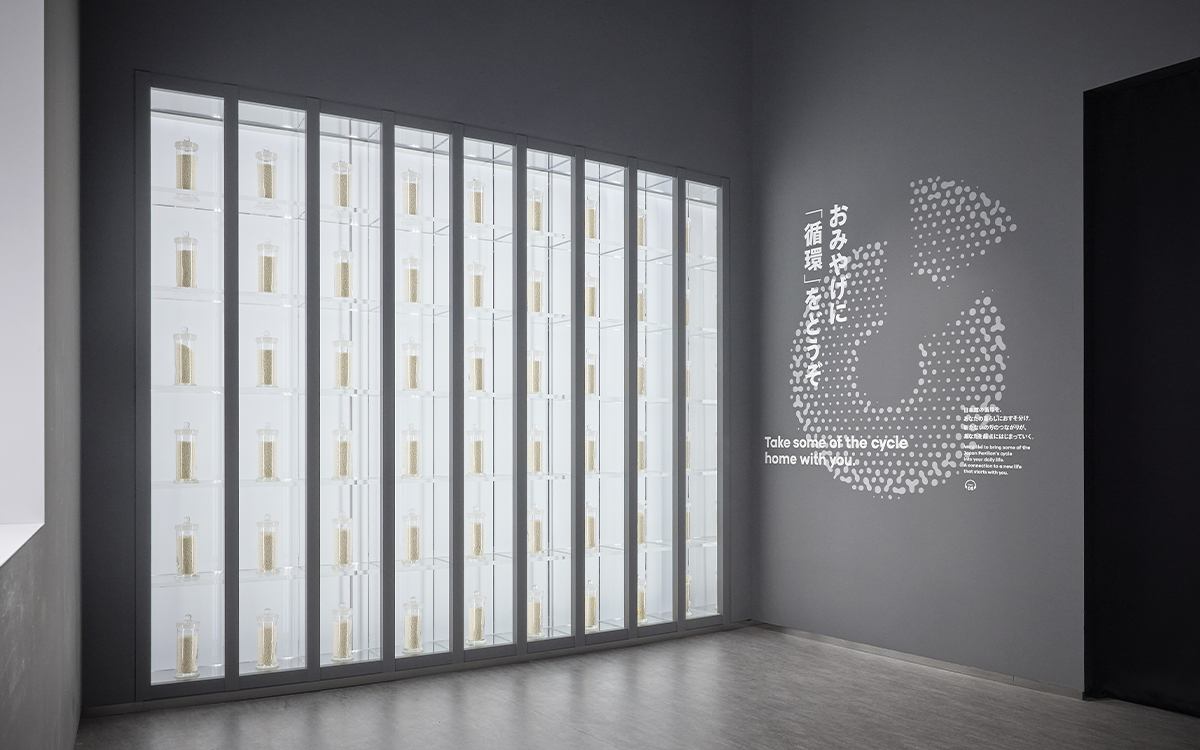
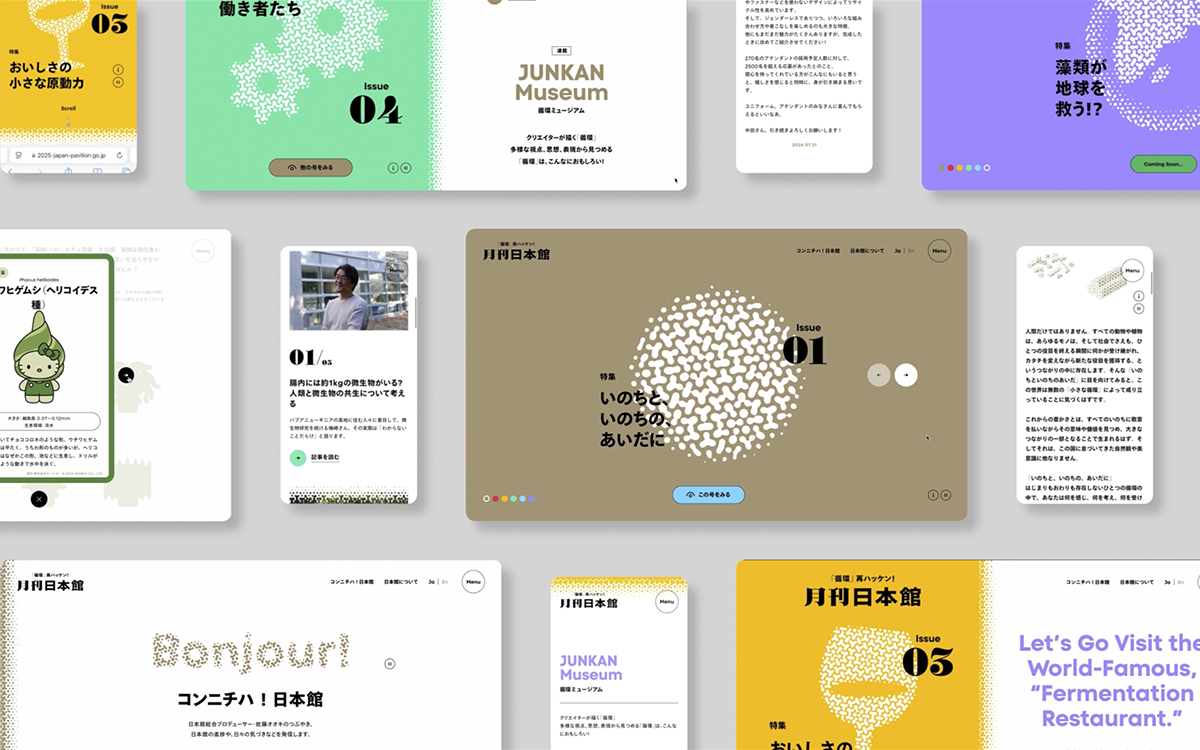
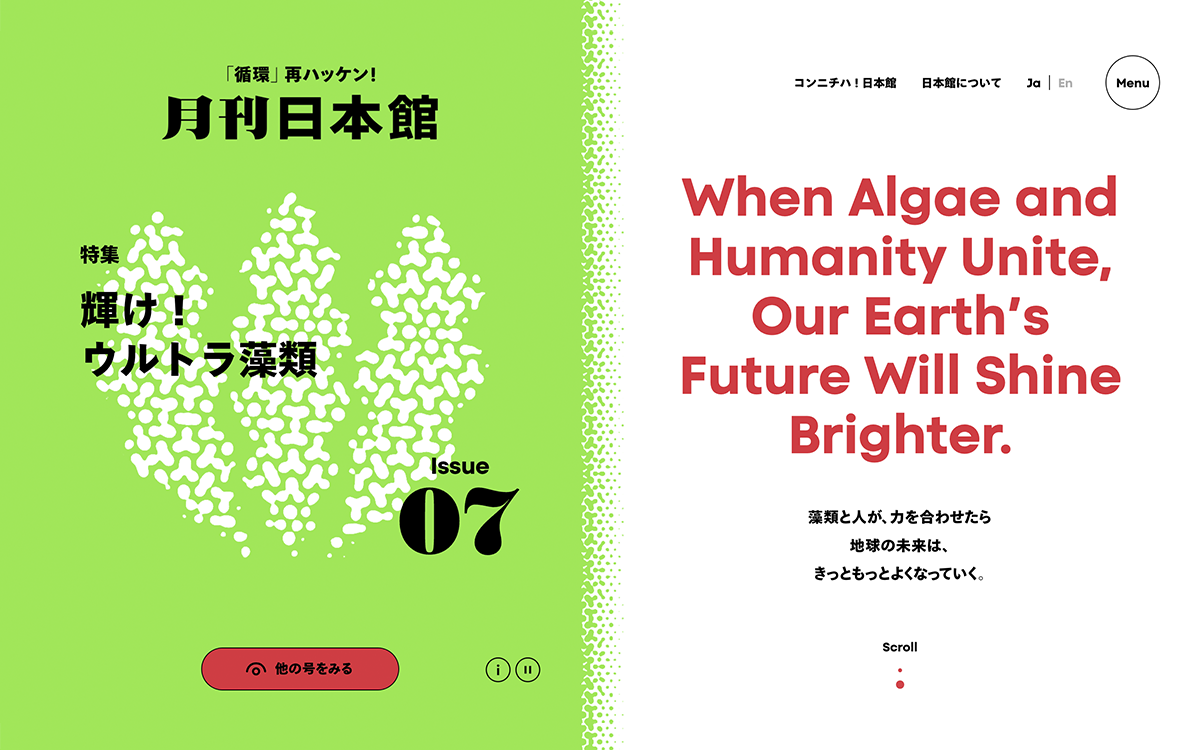
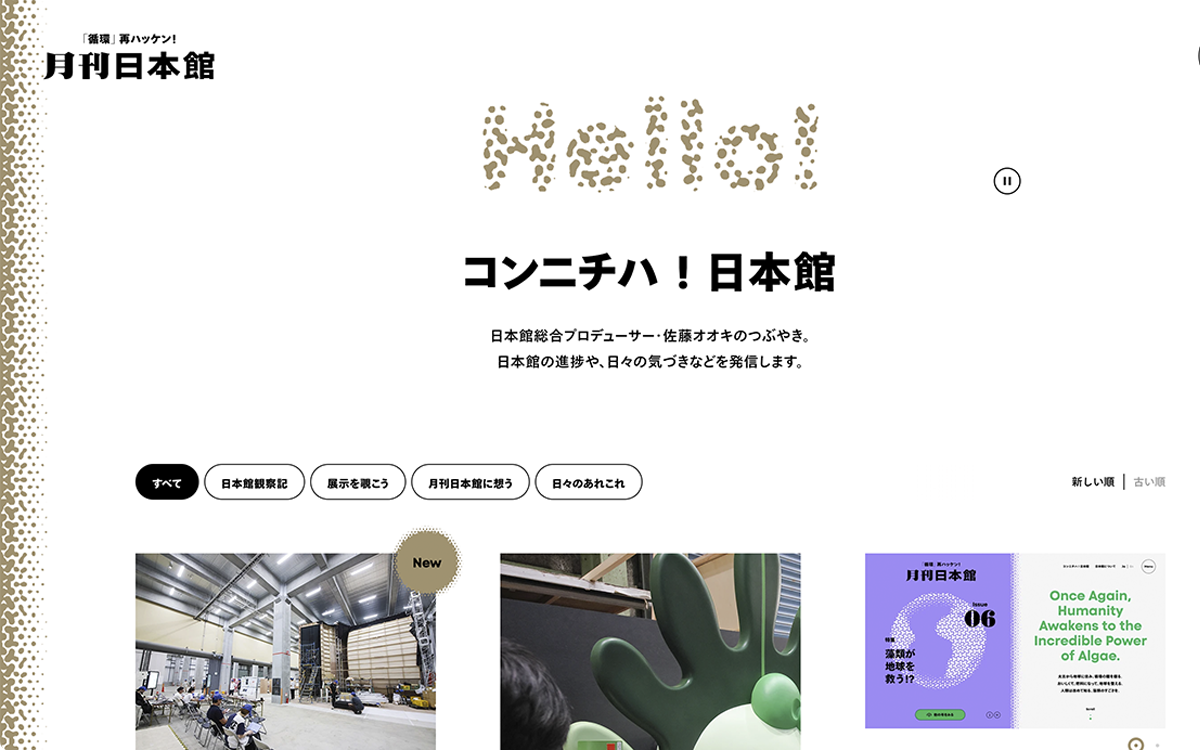
The visual identity itself breathes like a living organism. It mutates—dividing and merging like an amoeba—growing, shifting, and continuously evolving. This soft, organic "form" morphs into icons and illustrations, quietly permeating every aspect of the pavilion’s design. As signage throughout the interior, it responds to each space with a multitude of expressions.
Collaboration
コラボレーション
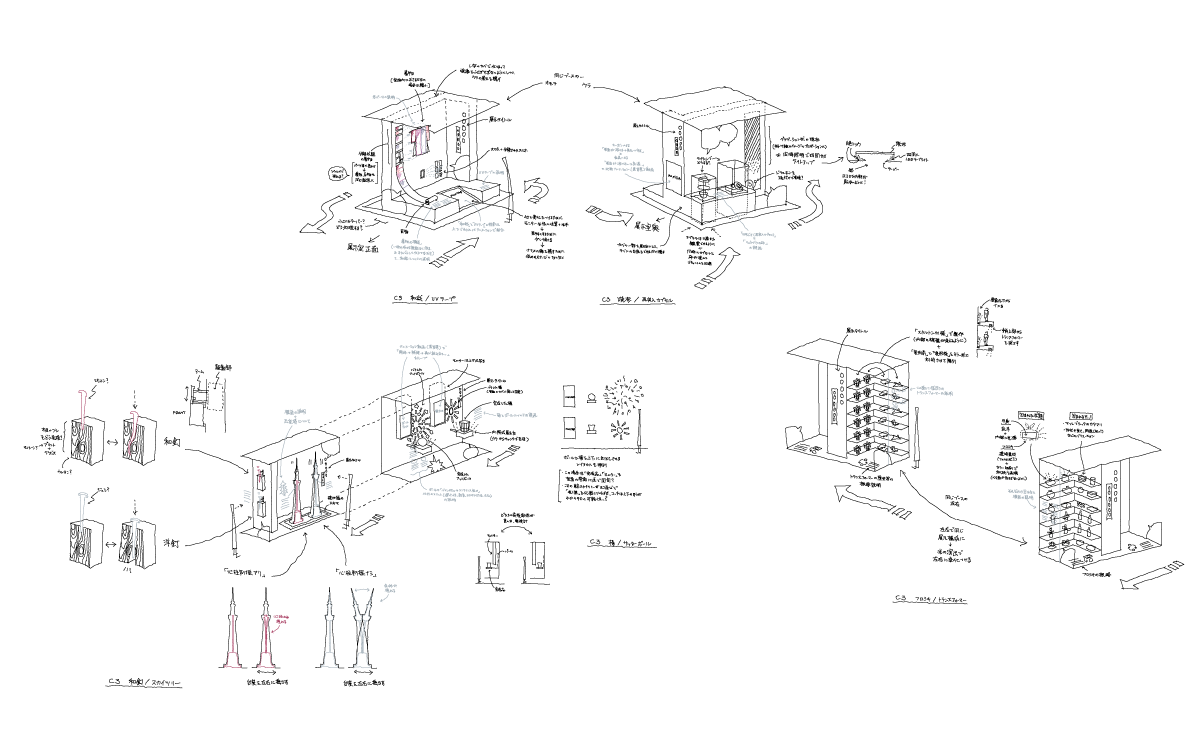
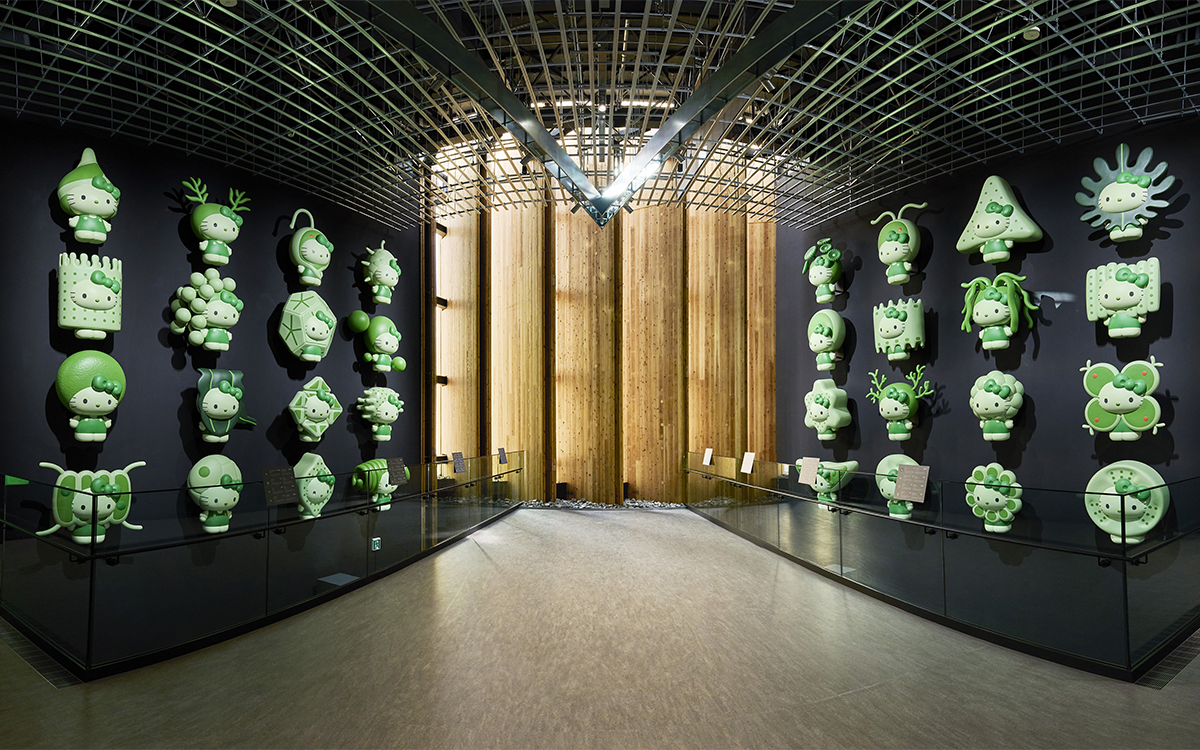
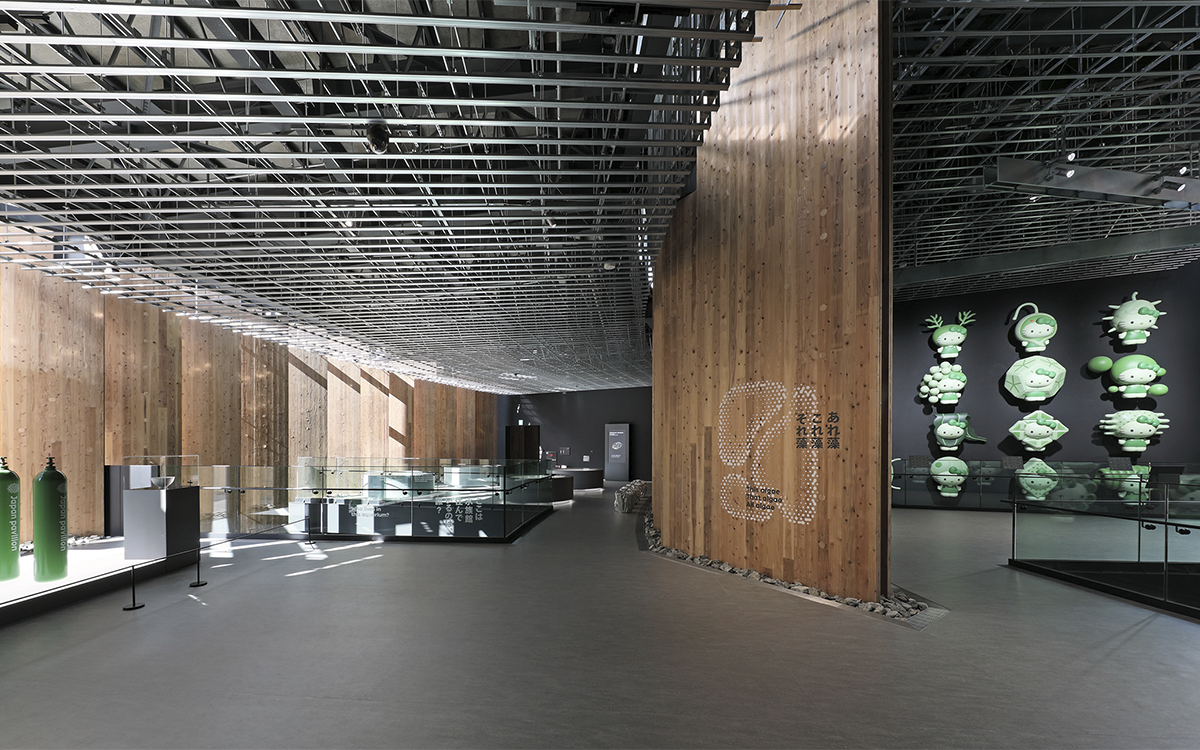
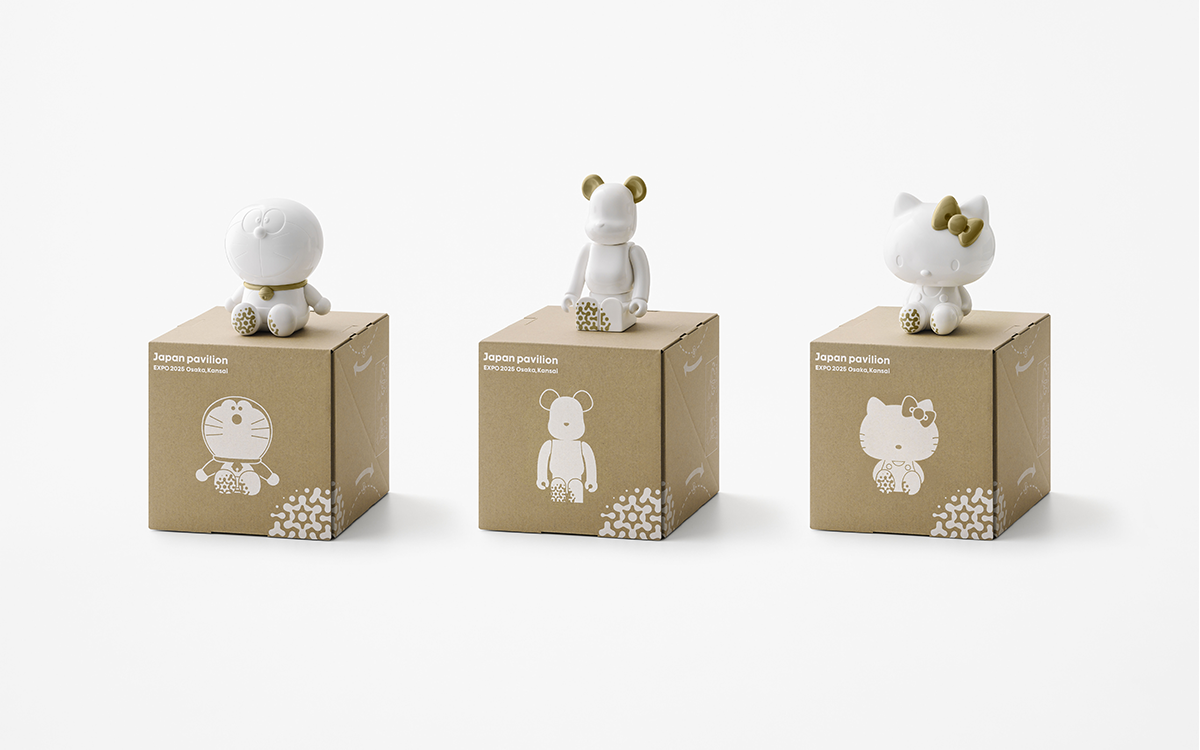
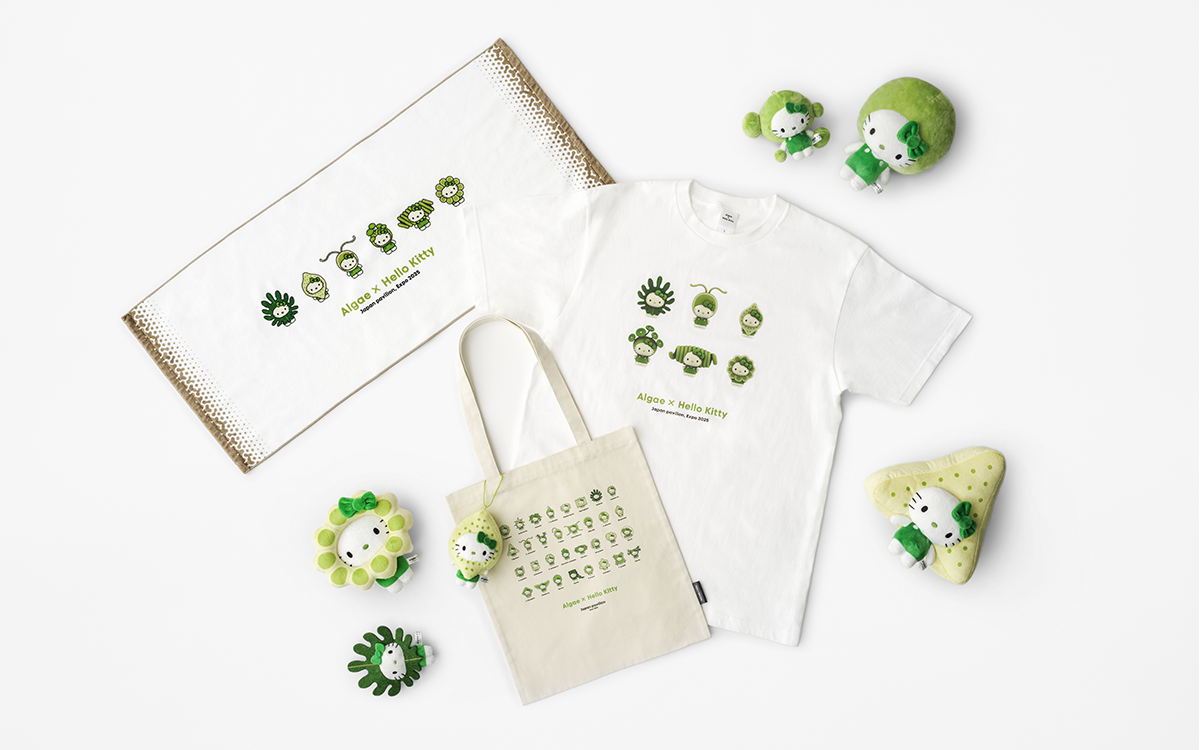
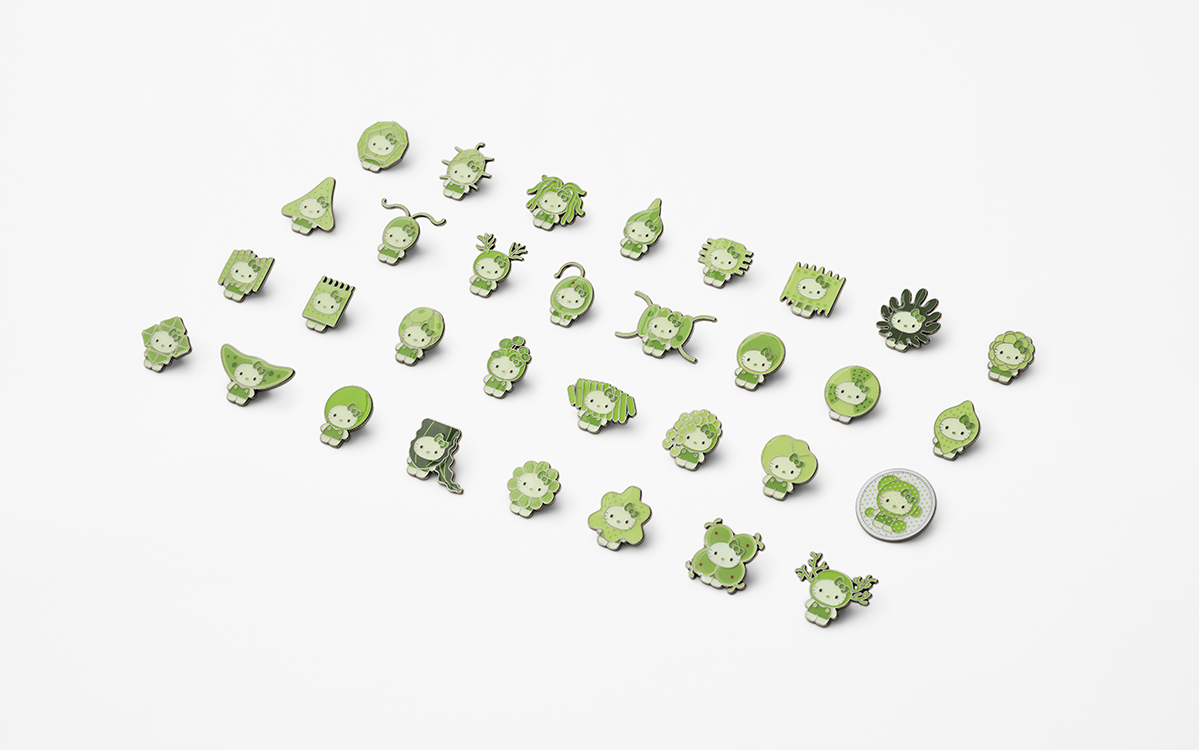
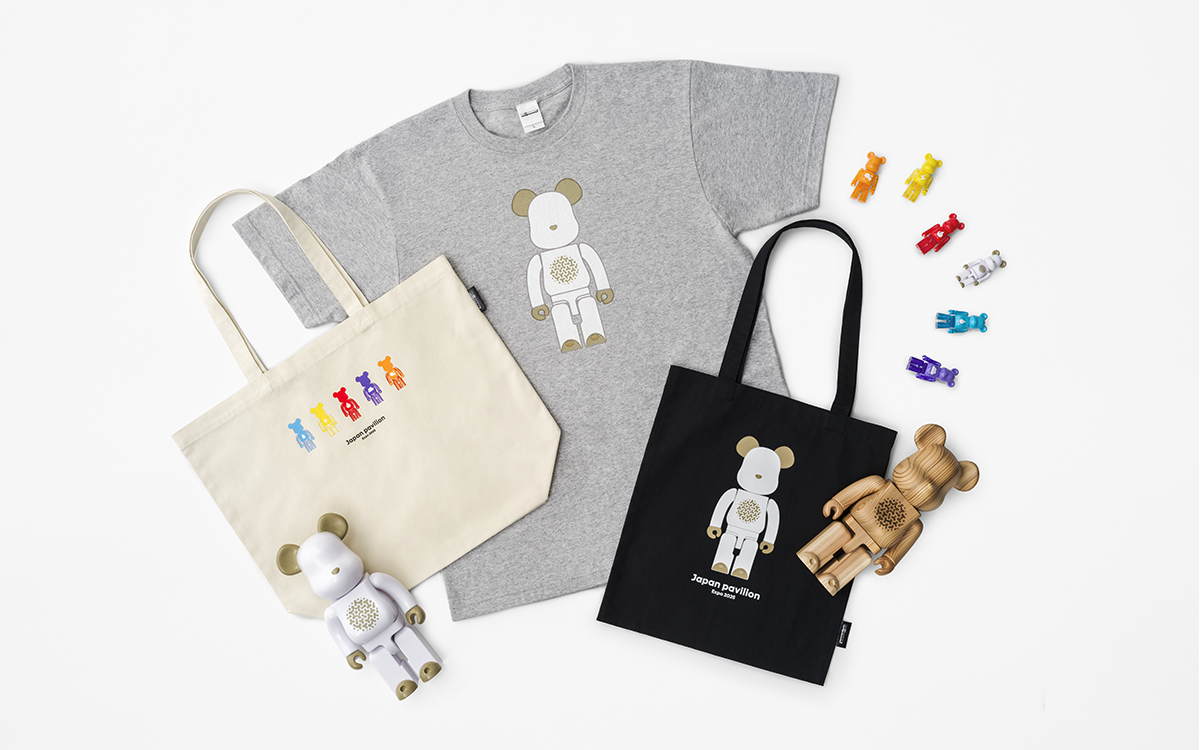
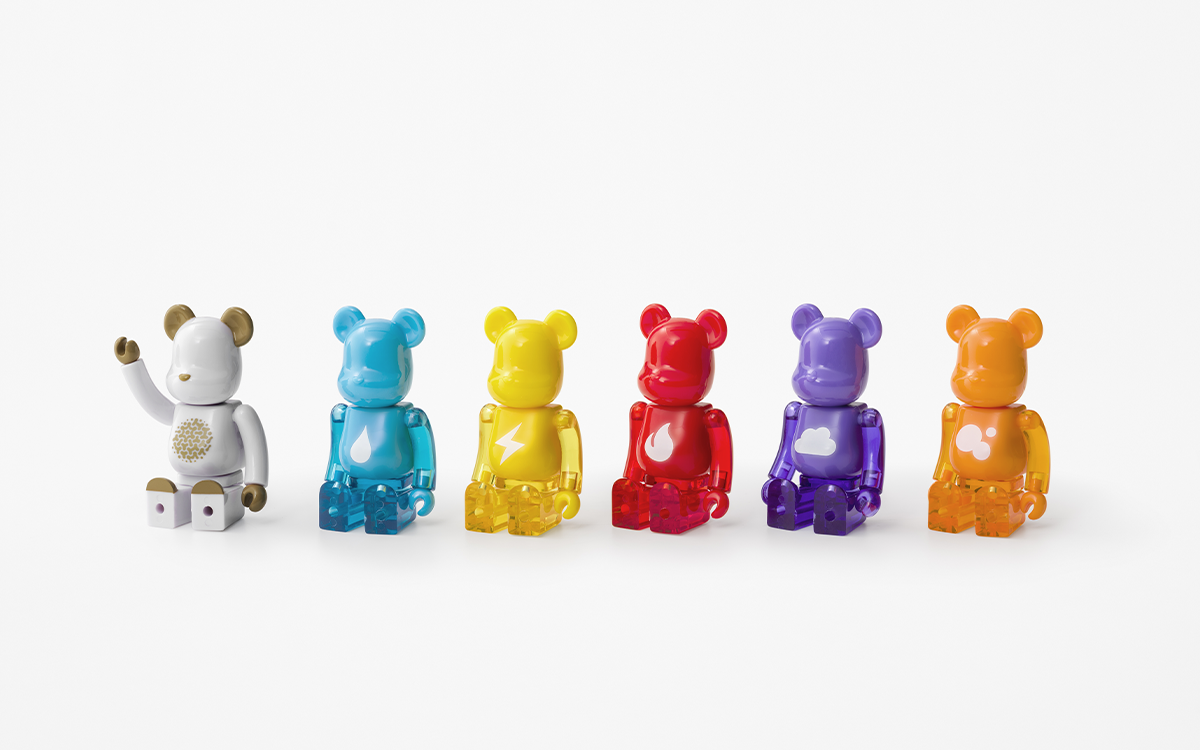
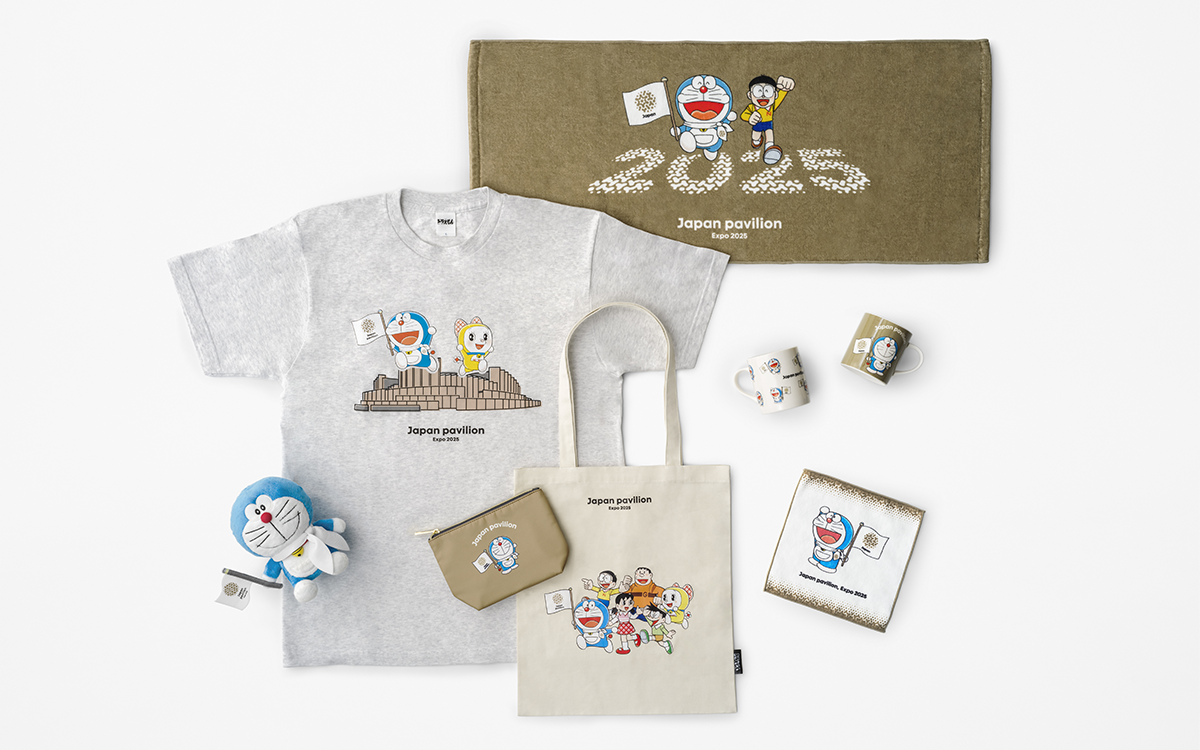
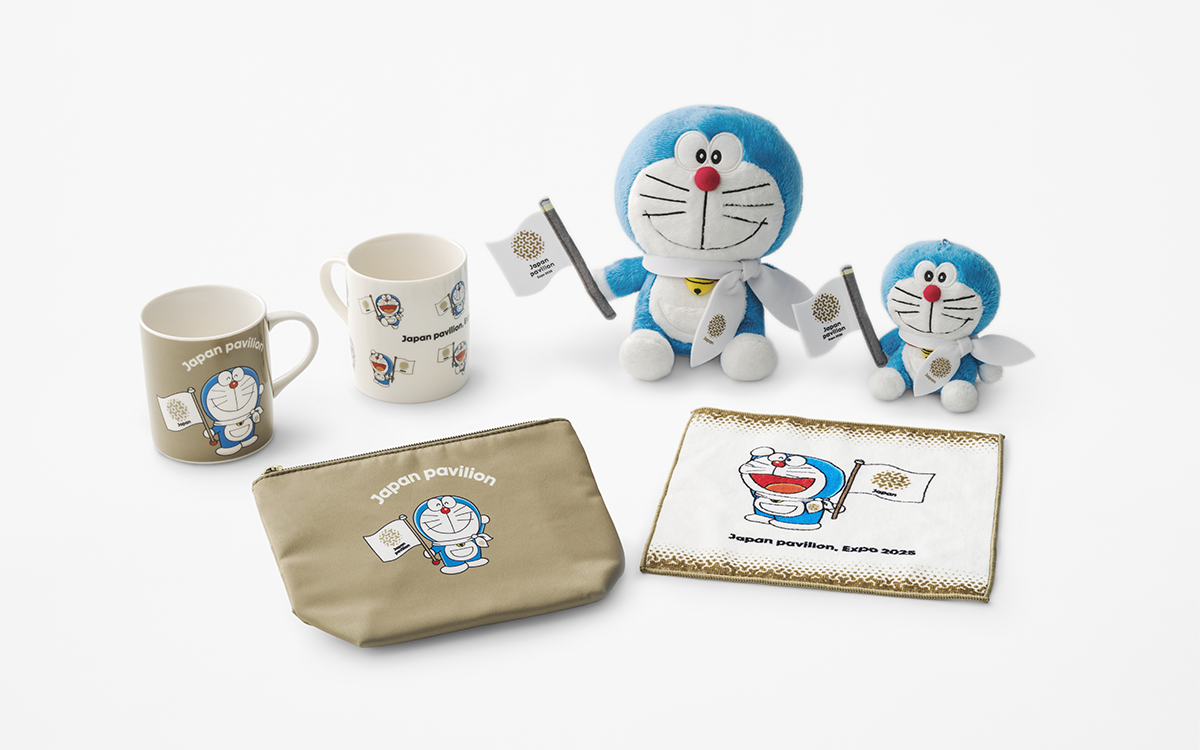
Three characters serve as navigators within the Japan Pavilion. In the Plant Area, BE@RBRICK appears—characterized by its collaborations and "wrappings" with diverse elements. Here, it assumes invisible roles—embodying elements such as "CO₂," "heat," "electricity," and more. In the Farm Area, Hello Kitty embodies the diversity of 32 kinds of algae. And in the Factory Area, Doraemon introduces various products and mechanisms as if pulling "secret gadgets" from his pocket—illustrating Japan’s philosophy that things not built to be tough can, in fact, last longer.


Souvenir
グッズ
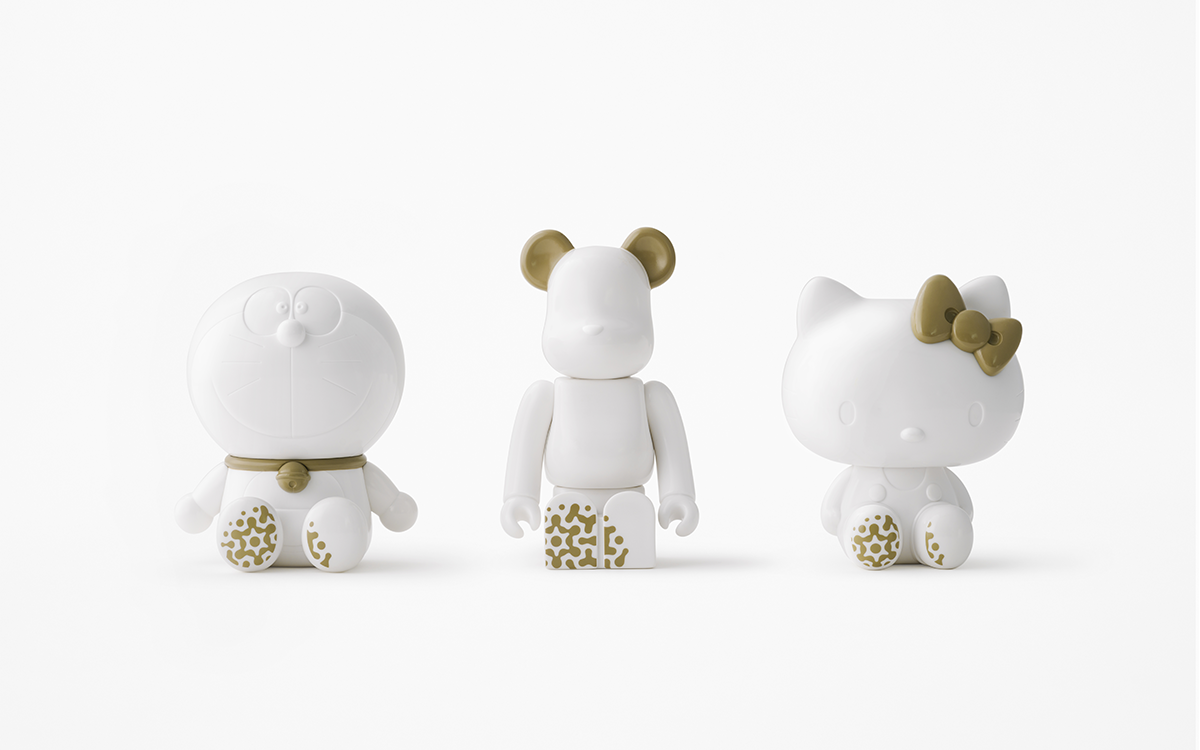
The three characters—BE@RBRICK, Hello Kitty, and Doraemon—appear as original soft vinyl figures, accompanied by a wide array of items featuring the pavilion’s visual identity, all carefully reviewed and supervised for design consistency. Reflecting the Factory Area’s theme of “designing with softness,” the figure packaging is designed to fold with a single motion, making them easier to recycle. These items, including their packaging, are not simply souvenirs, but extensions of the pavilion experience—designed to carry its memory into everyday life and gently prolong the cycle beyond the venue.
Product
プロダクト
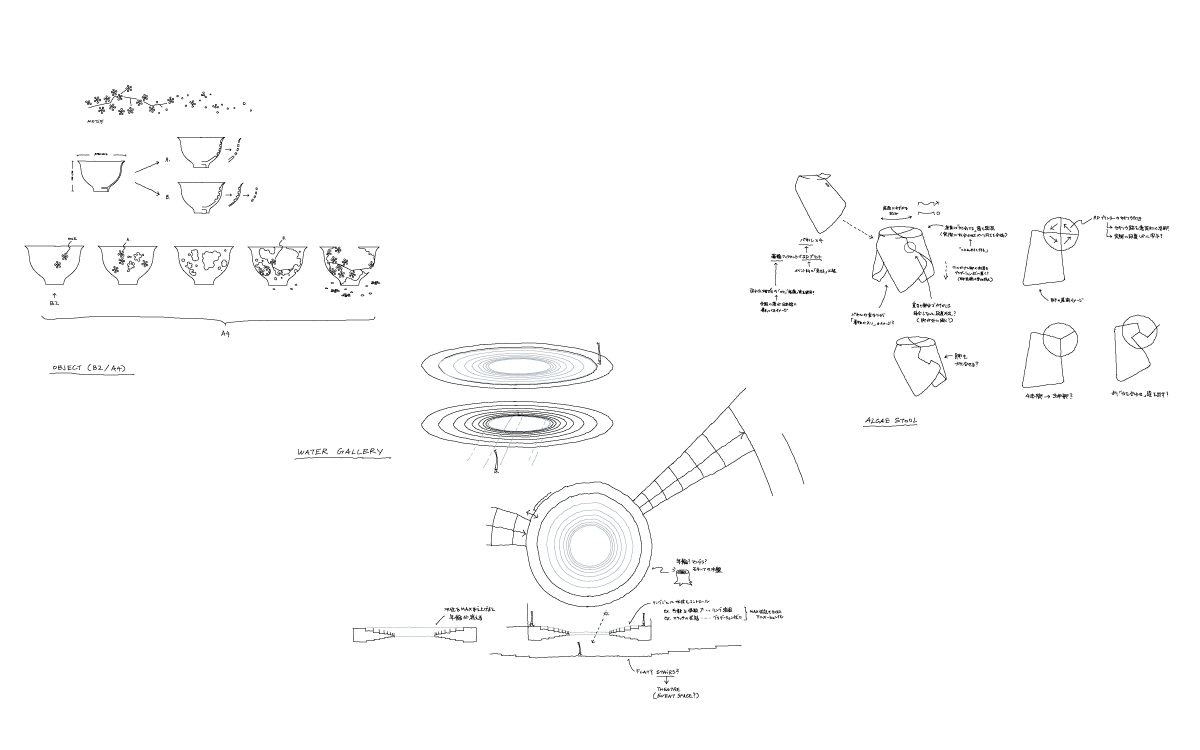
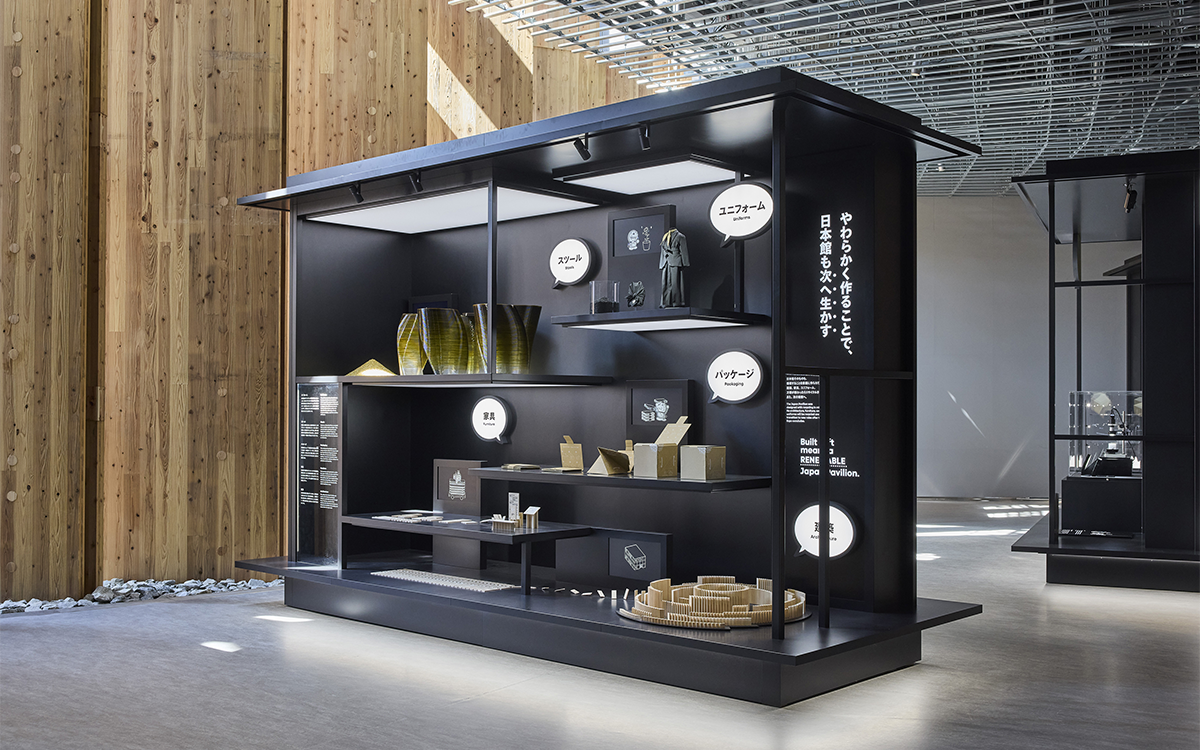
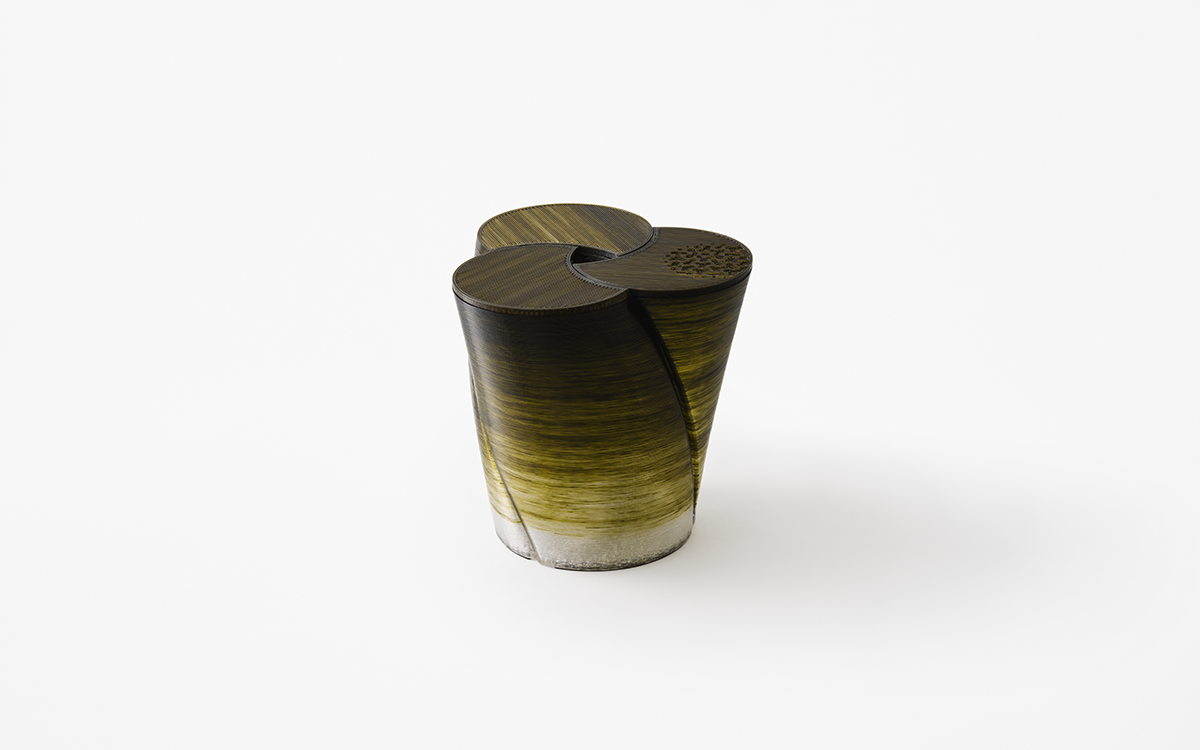
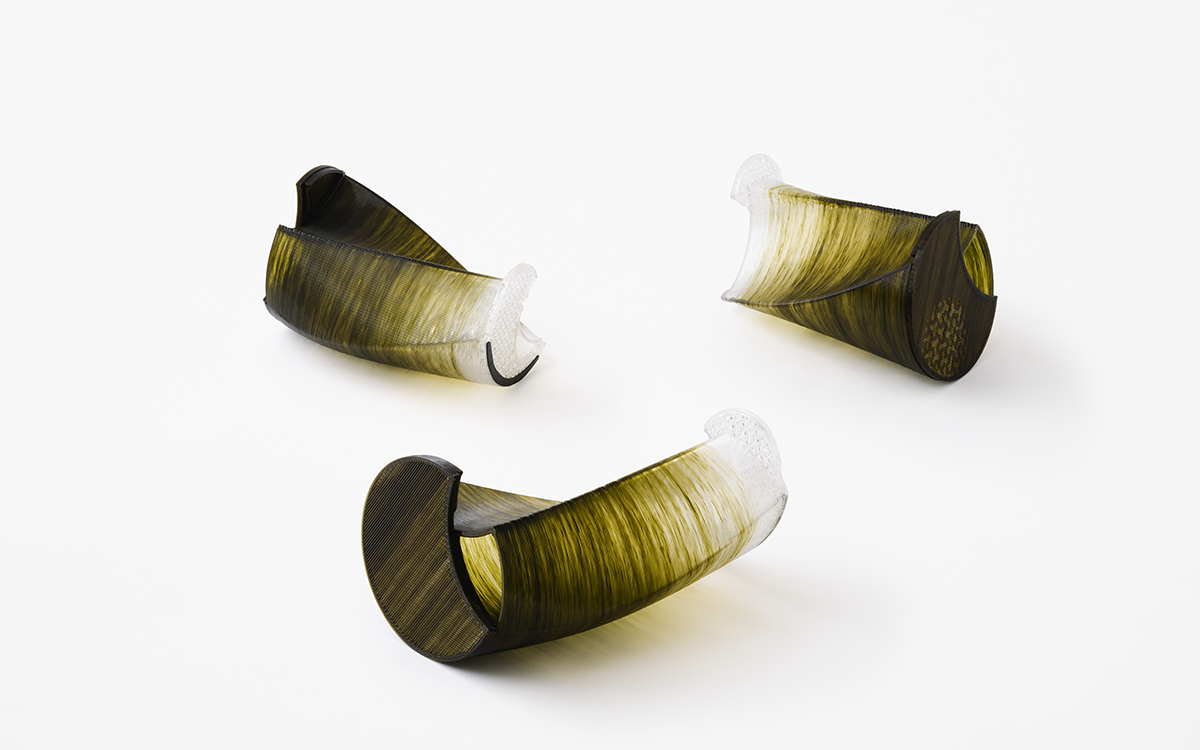
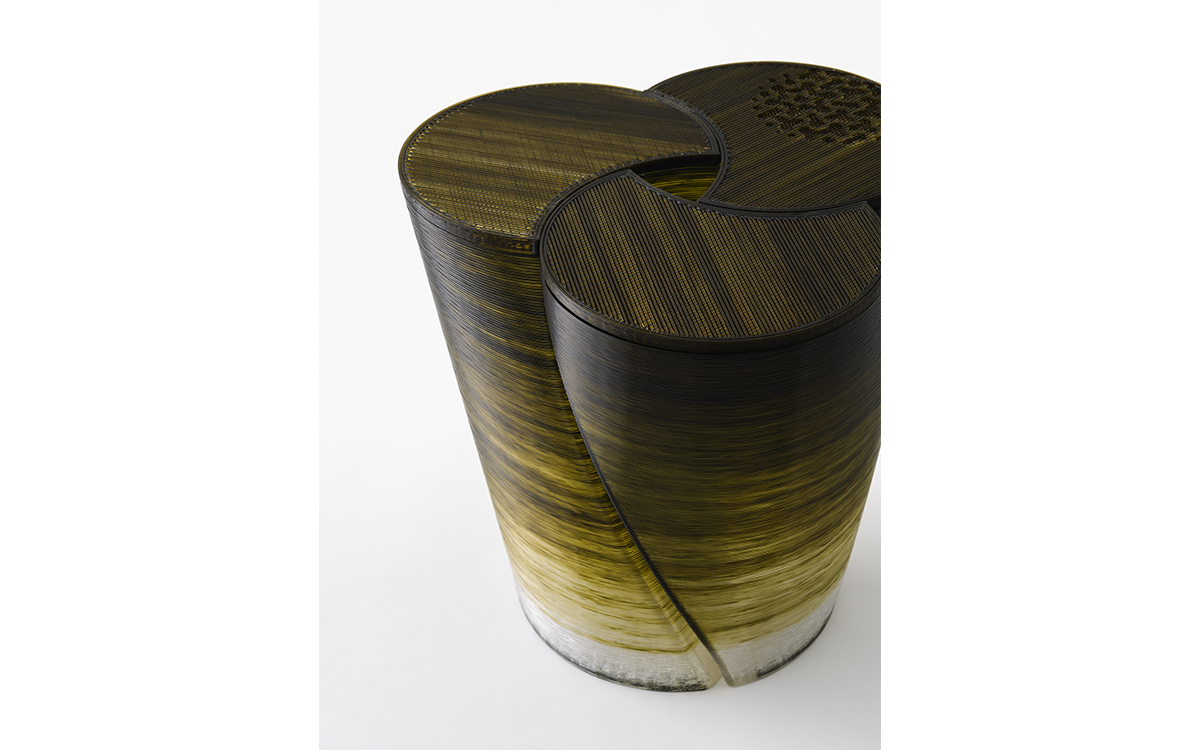
The pavilion’s products embody the theme of circulation. In the factory area, stools are 3D-printed from a composite of algae and bioplastics. Using traditional Japanese joinery without adhesives, they are easy to dismantle and reuse. Benches and signs are also made of CLT, matching the architecture, with minimal processing for disassembly and future use. Elsewhere in the pavilion, "dissolvable vessel" designed to biodegrade via microorganisms add yet another layer of sustainability and craft expression.
Uniform
ユニフォーム
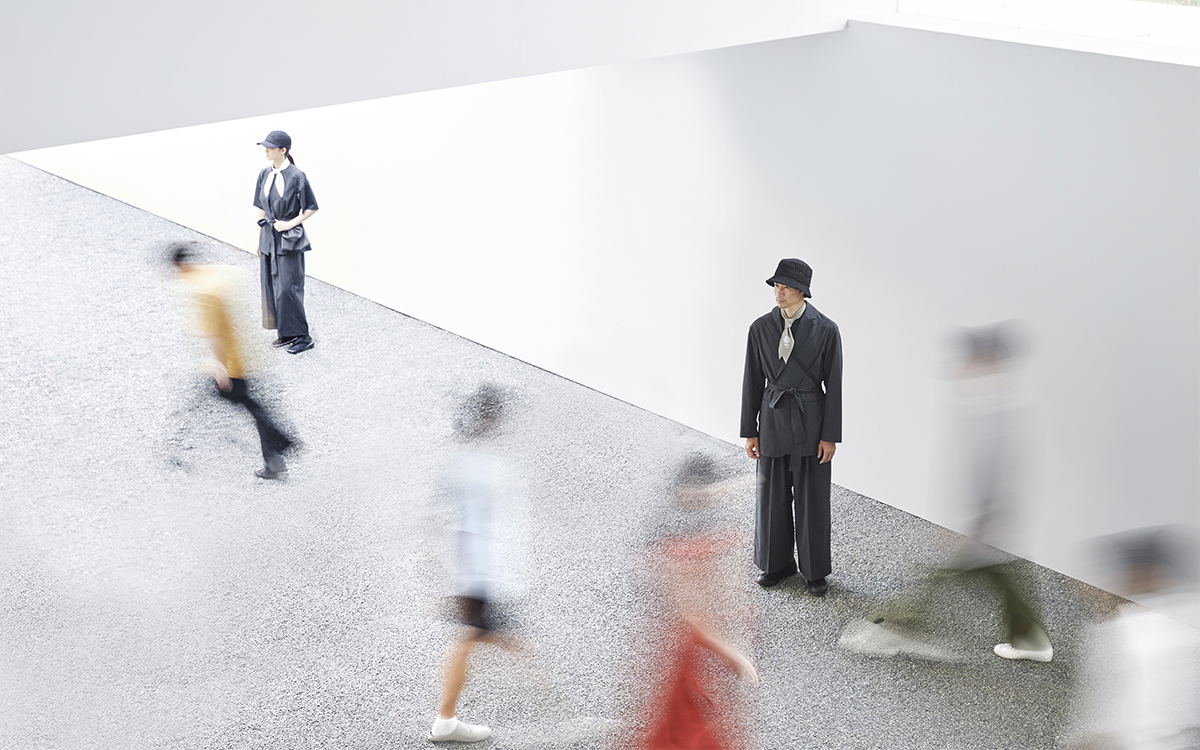
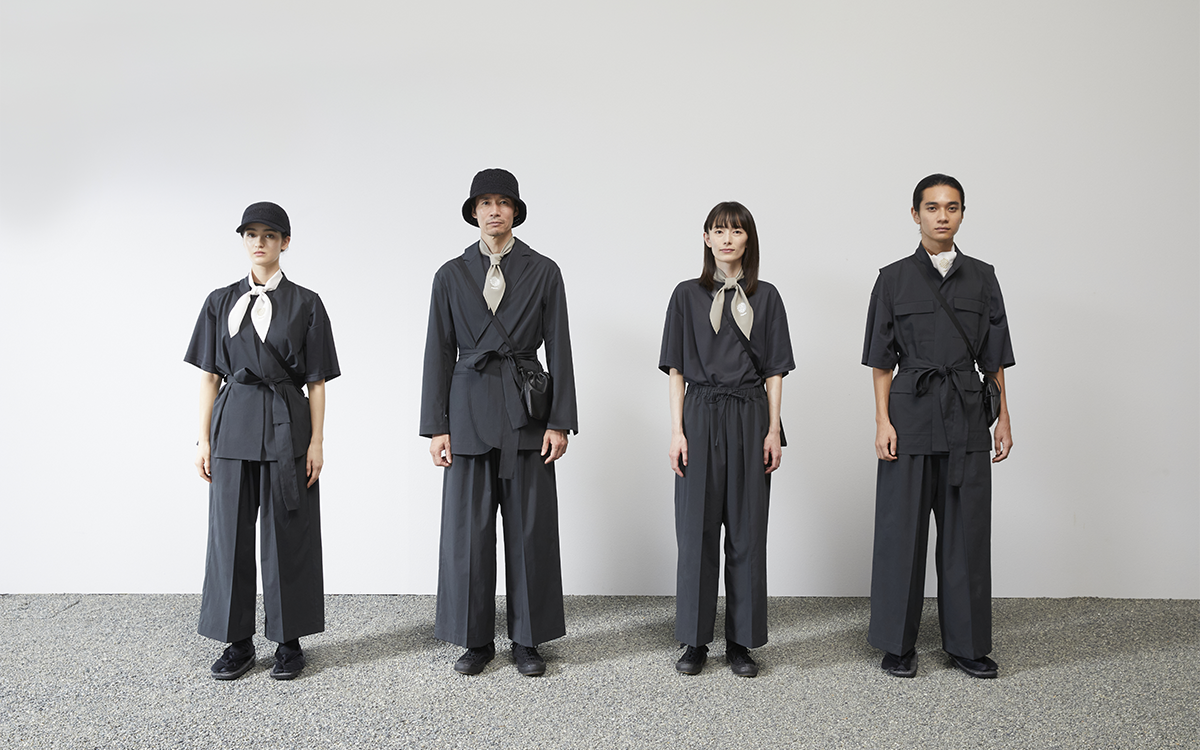
Inspired by the structure of the kimono, the uniforms celebrate the Japanese sensibility of embracing "space" between fabric and body. Multiple items allow attendants to express their own style through free combinations. Functionality—comfort, ease of movement, and breathability—is carefully balanced with environmental mindfulness, through the use of recyclable materials. Buttons and zippers are eliminated for smoother recycling post-exhibition. Their look is completed with bespoke footwear—subtly inspired by traditional Japanese setta sandals.
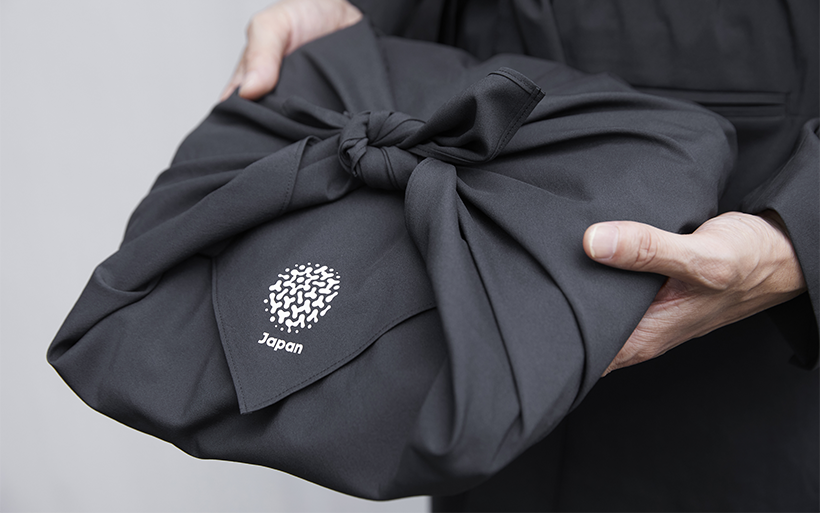
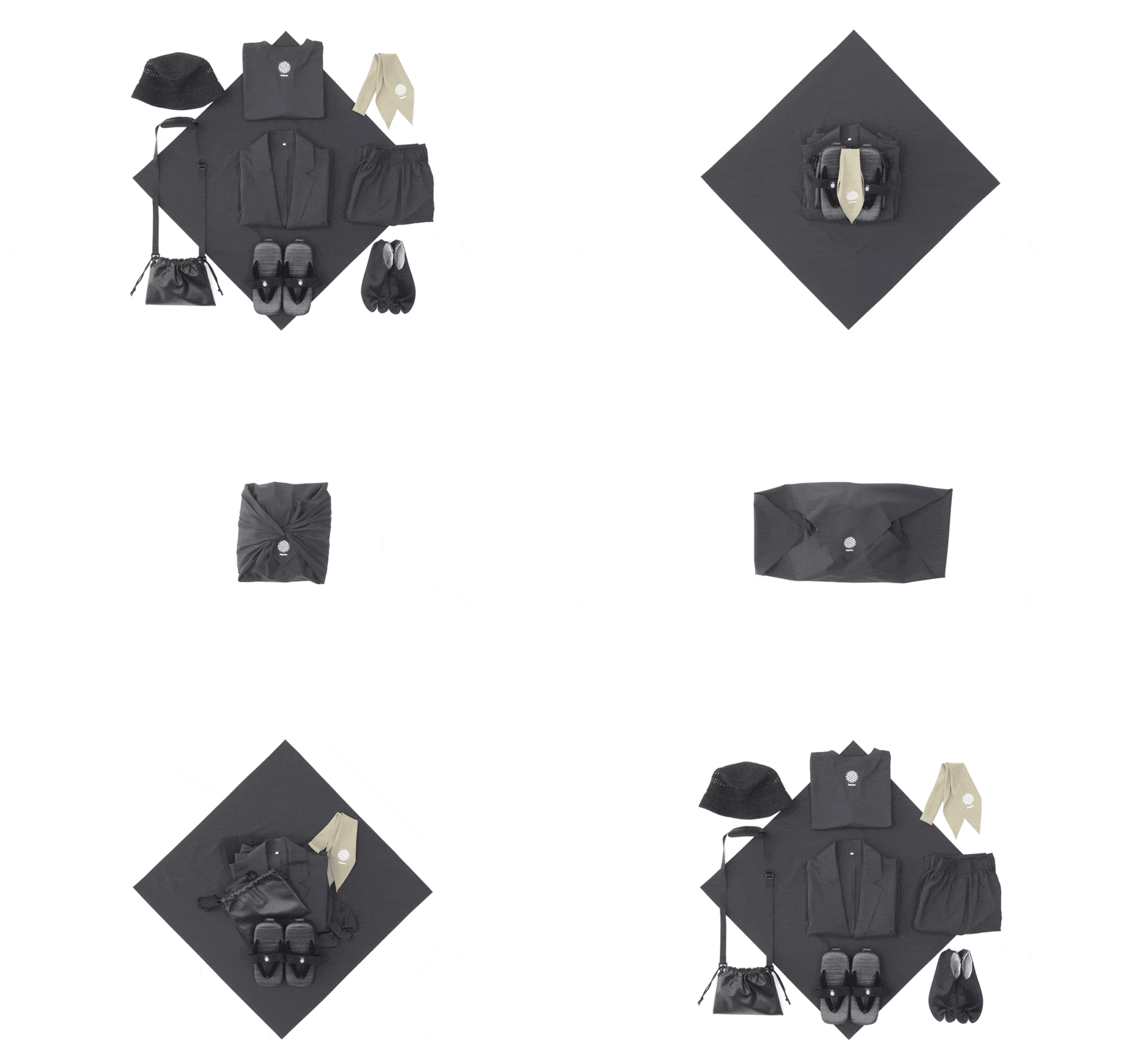
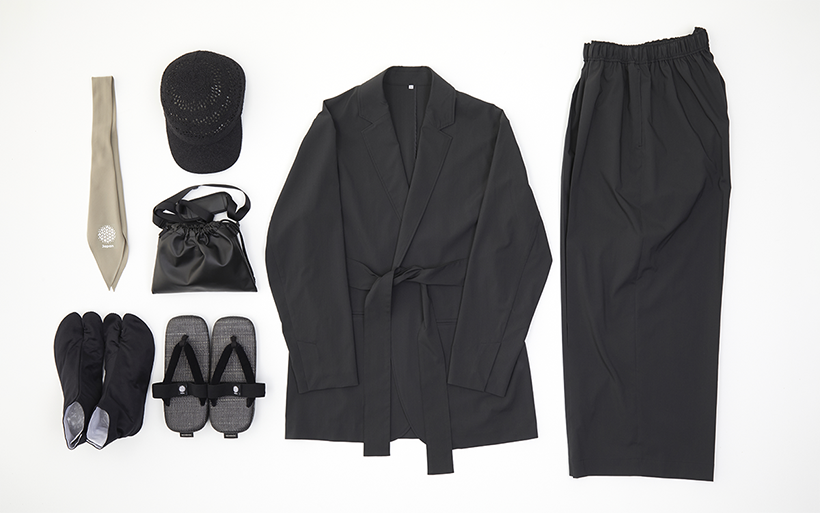
©Allan Abani
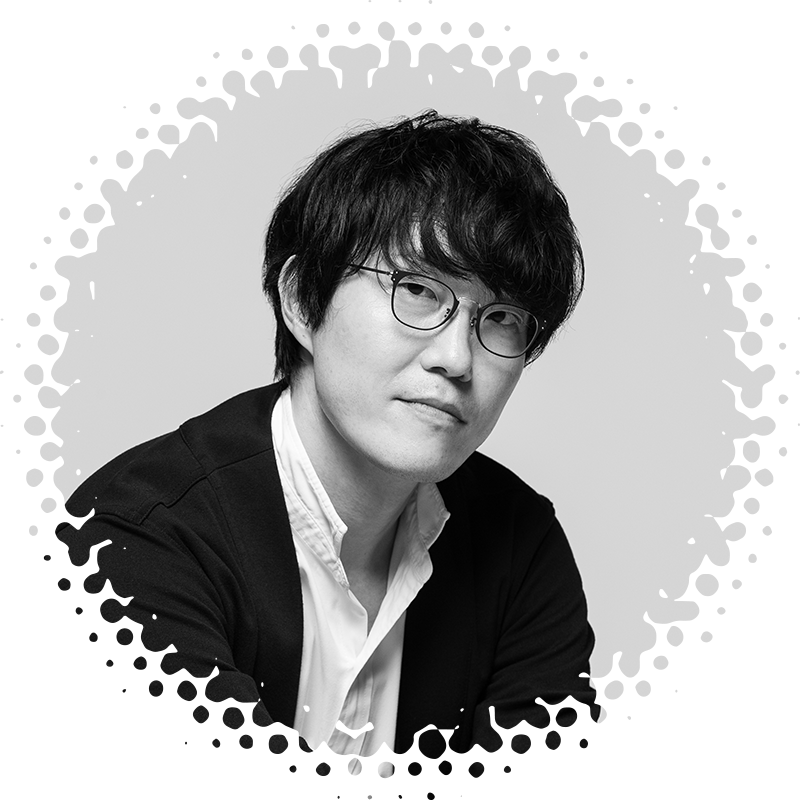
Japan Pavilion General Producer/General Designer
Oki Sato
Born in Canada in 1977, Oki studied architecture at Waseda University, graduating top of his class in 2000. He earned his master's degree from Waseda in 2002 and founded design studio Nendo that same year. With multidisciplinary studios in Tokyo and Milan, Oki's work spans a wide range of fields, such as architecture, product design, and branding, and has been recognized internationally with awards on several occasions, including in Italy, France, and the UK where he was named Designer of the Year. His recent major projects include the Tokyo 2020 Olympic cauldron, and he is also involved in the design of the new TGV trains for France's high-speed rail network.
Associate Producer

©Masahiro Ohgami
Architectural/Exhibition
Tsubasa Shindo
Born in Aichi Prefecture in 1991. Senior designer. He studied architecture at Waseda University and the Graduate School of Waseda University, and then studied abroad at the Institute of Architecture at the Technical University of Berlin before joining nendo in 2017. He conceptualizes architecture and installations through experiential perspectives to create memorable spaces. Aims to create spaces that visitors will remember, and conceives of architecture and installations based on experiences. A licensed first-class architect. Notable projects include “nendo: breeze of light”, “Escher x nendo: Two Worlds”, and “House of Stairs”.

©Masahiro Ohgami
Visual Communication
Naoko Nishizumi
Born in Saitama Prefecture in 1991. Senior designer. After graduating from the Department of Industrial and Craft Design at Musashino Art University, she joined nendo in 2014. As a graphic designer, she works on a wide range of projects using a cross-disciplinary approach, from graphics to product design. Major projects include the HANDS branding project, the overall design of the World Business Satellite (WBS) program, and product design for media luxe products.
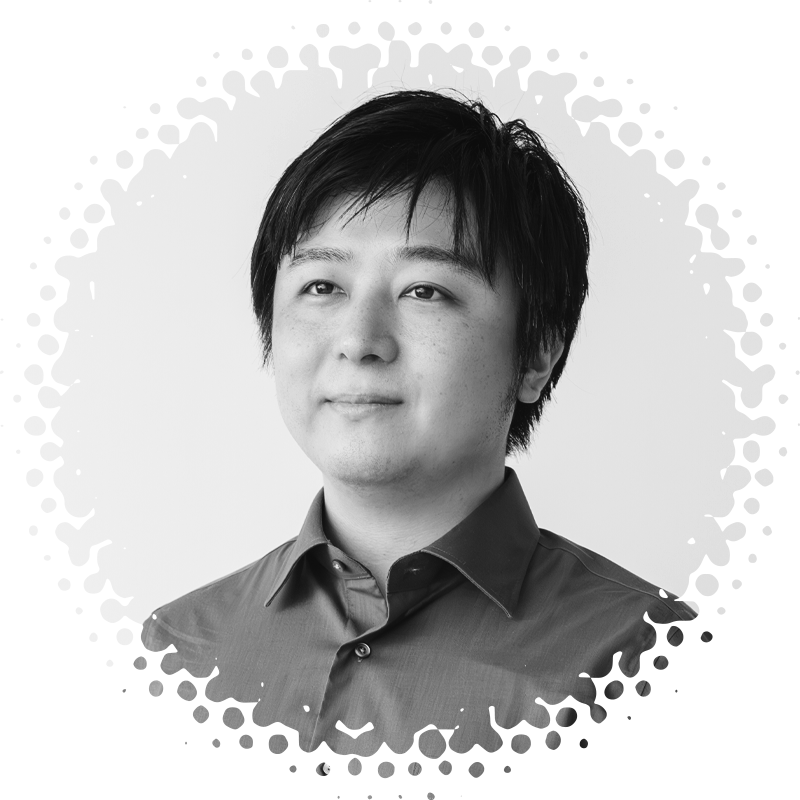
©Masahiro Ohgami
Story/Content
Takahiro Fukino
Born in Kanagawa Prefecture in 1986. Senior Researcher. After completing a doctorate at the Graduate School of Engineering at the University of Tokyo, he joined nendo in 2018. He plans and designs exhibitions that incorporate knowledge from the natural sciences, exploring the connections between science, technology, and society through a design-driven approach. His major works include the Suntory Museum of Art “uncovered skies”, the Tokyo 2020 Olympic Cauldron, the “junwan” series, the Tokyo Midtown Christmas Tree, and TOKYO CREATIVE SALON “yawar:akasaka”.
(INPO)